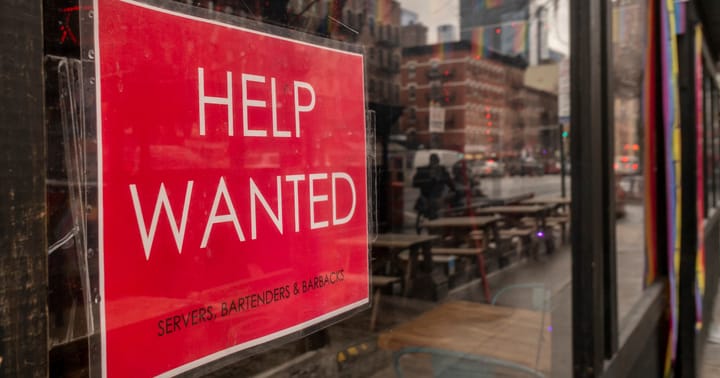
The restaurant industry reclaimed its position as an employment engine in August, adding jobs across all sectors while other industries stalled. Bureau of Labor Statistics data reveals that food service establishments led all industries in hiring for the month, reversing a troubling trend from June and July when restaurants shed workers.
The reversal matters because it signals stabilization after a period of uncertainty that had rippled through kitchens, dining rooms, and back offices nationwide. Summer months typically see seasonal strength in hospitality, but consecutive months of losses suggested deeper structural problems. The August rebound indicates those concerns were temporary rather than the start of a sustained contraction.
Restaurant operators have battled competing pressures for months. Labor costs remain elevated as wage competition with retail and service sectors intensifies. Food prices have moderated from pandemic peaks, but remain volatile. Consumer spending on dining out has shown resilience even as inflation persists elsewhere in the economy, giving establishments reason to expand their teams.
The employment gains likely reflect diverse hiring patterns across restaurant types. Quick-service chains typically maintain steadier staffing needs year-round, while fine dining establishments often ramp up in late summer ahead of fall entertaining season. Casual dining continues its slow recovery after pandemic-driven closures that permanently shuttered thousands of locations nationwide.
State-level employment patterns tell a fuller story. Markets with strong tourist seasons, particularly coastal and destination cities, probably led hiring. Cities like Miami, Las Vegas, and New Orleans tend to see restaurant expansion in late summer as travelers return and conferences resume. Meanwhile, inland markets dependent on local traffic showed more modest gains.
The data arrives as restaurant operators grapple with technology adoption that both creates and eliminates certain roles. Self-ordering kiosks and digital payment systems reduce front-of-house staffing needs in some concepts, while fast-casual and delivery-focused models demand expanded kitchen and logistics teams. The net effect masks compositional shifts that matter for workers.
Industry consolidation continues reshaping the labor market. Large multi-unit operators with standardized training programs absorb market share from independent restaurants struggling with thin margins and staffing challenges. This concentration means job growth increasingly flows to corporate-operated locations rather than locally-owned establishments that employ workers in different ways.
August's gains provide temporary relief for workforce development discussions that have dominated industry forums. Labor shortage narratives dominated 2021 and 2022 headlines, but recent data reveals a more nuanced picture of shifting demand, wage improvements in some segments, and persistent challenges in others. Restaurant work remains lower-wage compared to other industries, though some markets have seen significant advancement.
Looking ahead, the employment trajectory depends on consumer spending patterns and whether inflation pressures accelerate again. Economic uncertainty could suppress discretionary dining spending, potentially reversing August's momentum. Interest rates and credit availability also influence expansion plans at established chains and among entrepreneurs developing new concepts.
The August turnaround underscores the restaurant industry's volatility compared to steadier sectors. Food service employs roughly 16 million people across the United States, making it one of the largest employment categories. When restaurants hire, communities feel the effect across neighborhoods and local economies.