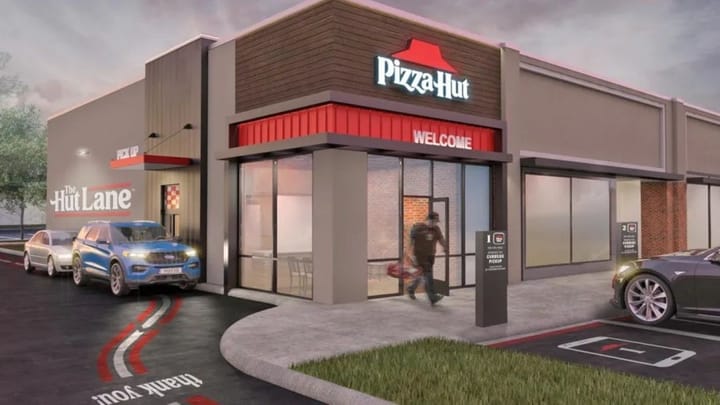
Yum Brands completed its exit from Pizza Hut on Wednesday, offloading the 70-year-old pizza chain in two separate transactions valued at $2.7 billion combined. Private equity firm LongRange Capital acquired Pizza Hut's domestic U.S. operations, while Yum China obtained the international division in a deal structure that marks a significant reshaping of the casual dining landscape.
The sale represents Yum Brands' strategic pivot away from direct pizza ownership. The Louisville-based parent company, which built its empire on fried chicken through KFC, has increasingly focused on brand consolidation and profitability over portfolio expansion. By dividing Pizza Hut's global operations, Yum Brands extracted maximum value while passing operational complexity to specialized owners better positioned to navigate regional markets.
LongRange Capital's acquisition of U.S. operations positions the private equity firm as a major consolidator in American pizza. The firm gains control of Pizza Hut's roughly 6,100 domestic locations, franchisee relationships, and supply chains. Private equity typically focuses on operational efficiency, cost reduction, and expansion of profitable units. For LongRange Capital, the immediate challenge involves stabilizing a brand that has faced menu fatigue and competitive pressures from emerging fast-casual pizza concepts like MOD Pizza and Blaze Pizza, alongside entrenched competitors like Domino's and Papa John's.
Yum China's international acquisition gives the Shanghai-listed company direct control over Pizza Hut's footprint across Asia-Pacific and other non-U.S. markets. This move aligns with Yum China's broader strategy of owning brands outright rather than managing them as sub-brands under the Yum parent. The company operates KFC and Taco Bell in China with considerable success, adapting menus for local tastes. Pizza Hut in China has already experimented with local flavors, including seafood pizzas and regional toppings that deviate sharply from American offerings.
The $2.7 billion valuation reflects Pizza Hut's diminished market position compared to its heyday. In the 1990s and 2000s, the chain dominated global pizza delivery. Today, Domino's has surpassed it decisively in both scale and profitability. The U.S. pizza delivery market has fragmented, with consumers choosing between established players, regional chains, and direct-to-consumer models from independent pizzerias leveraging digital ordering.
For franchise owners, the LongRange deal introduces uncertainty about future direction. Private equity ownership often triggers operational overhauls, technology investments, and menu reimaginations. Franchisees may face pressure to modernize kitchens, adopt new point-of-sale systems, or adjust labor models. The speed of these changes depends on LongRange Capital's playbook and management appointments.
Pizza Hut's immediate future hinges on menu innovation and delivery reliability. The brand must compete against Domino's digital-first infrastructure and lower price points while reclaiming market share from regional pizza chains. LongRange Capital typically holds assets for five to seven years before sale, meaning investors are betting on Pizza Hut's turnaround potential within that timeframe.
The separation also reflects broader consolidation trends in quick-service restaurants. Yum Brands retains KFC and Taco Bell but now operates leaner, focused on high-return brands. Dividing Pizza Hut's global operations between two owners allows each entity to tailor strategies for their specific markets without corporate bureaucracy constraining decisions.