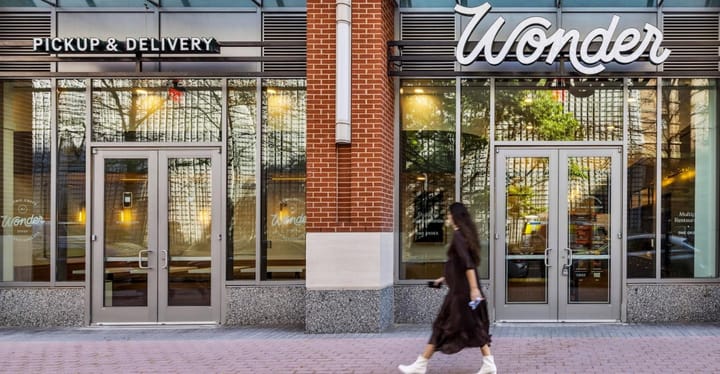
# Tech Tracker: Wonder Closes in on NYC's Ghost Kitchen Market
Wonder, the ghost kitchen operator backed by venture capital, has acquired another New York City brand, expanding its portfolio of delivery-only restaurants. The company now controls multiple culinary concepts across the city, each designed to maximize throughput and profitability from centralized kitchens.
The acquisition marks Wonder's continued strategy of consolidating restaurant brands under a single operational umbrella. By acquiring established NYC concepts, Wonder gains existing customer bases and proven menu formats while applying its operational playbook across kitchens. This model allows the company to run multiple brands from one location, reducing overhead and increasing margins through shared equipment, staff, and supply chains.
Wonder's approach reflects the broader ghost kitchen consolidation trend. Rather than opening restaurants with dining rooms, the model relies entirely on delivery platforms like DoorDash, Uber Eats, and Grubhub to reach customers. This eliminates expensive real estate, front-of-house labor, and the unpredictability of foot traffic. Wonder's acquisition strategy transforms this further by aggregating multiple brands that can operate simultaneously in a single kitchen.
The company has already built a reputation for purchasing established restaurant concepts and converting them into delivery-only operations. Each brand maintains its original identity and menu integrity while benefiting from Wonder's logistics infrastructure and vendor relationships. The financial benefits flow directly to Wonder's bottom line through reduced operational complexity.
Elsewhere in restaurant tech, Qu, a restaurant management platform, made a significant hire. The company continues building out its team as it competes in the crowded space of kitchen operating systems and scheduling software. Qu's focus on streamlining back-of-house operations positions it against established players like Toast and Toast's competitors.
Uber and Serve ended their partnership, signaling shifts in how delivery platforms collaborate with restaurant technology providers. Serve, which offered restaurant management and loyalty software, no longer has direct integration with Uber's vast merchant network. The split suggests either shifting priorities at Uber or Serve's decision to pursue independent growth strategies.
On the funding front, Palona and MarginEdge secured investment rounds. Palona, which helps restaurants manage procurement and suppliers, addresses a persistent pain point for independent operators. MarginEdge, a food cost management platform, targets similar problems around inventory and profitability tracking. Both companies operate in the unsexy but essential category of restaurant back-office software where incremental efficiency gains translate directly to saved dollars.
These four developments illustrate the restaurant tech landscape's current state. Ghost kitchen consolidators like Wonder prioritize operational scale and delivery model supremacy. Meanwhile, software companies like Qu, MarginEdge, and Palona chase profitability through thin-margin efficiency gains. The Uber-Serve split reveals that even tech giants and their partners can part ways when strategic interests diverge.
For restaurant operators, the message remains clear: whether you run a traditional restaurant or a delivery-only concept, software providers and platform operators continuously reshape how food businesses function. Wonder's NYC expansion simply accelerates a trend already underway: centralization, consolidation, and platform dependency define modern restaurant operations.