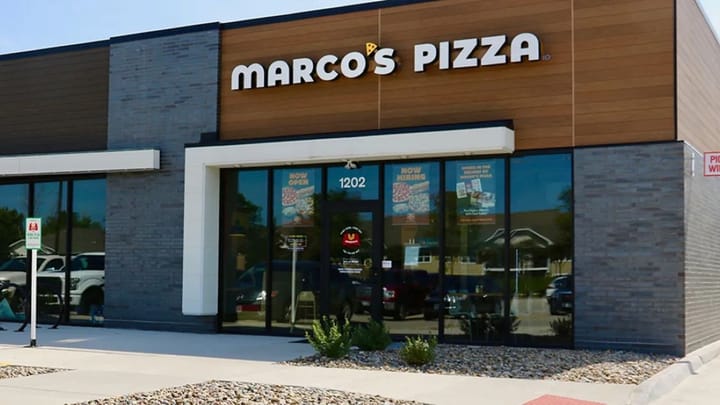
Marco's Pizza's largest franchisee continues its aggressive expansion strategy. Hoogland Restaurant Group, which operates more Marco's locations than any other franchisee, has acquired five additional stores across Tennessee and Texas. The deal brings the group's total footprint to 120 locations spread across 14 states.
This acquisition underscores the consolidation trend within the pizza franchise space, where major operators pursue scale to negotiate better supply chain terms and operational efficiencies. Hoogland's growth reflects confidence in Marco's Pizza's business model, even as the broader quick-service restaurant sector navigates persistent labor costs and consumer spending pressures.
Marco's Pizza, founded in Toledo, Ohio in 1978, operates primarily through franchising. The chain emphasizes handcrafted dough made fresh daily and offers customizable pizzas alongside wings, subs, and salads. Its franchise-heavy model allows rapid expansion without direct capital outlay, a strategy that has powered growth from regional player to national presence with hundreds of locations.
Hoogland Restaurant Group's dominance within the Marco's system positions it as a bellwether for the brand's health. Large franchisees typically possess the operational sophistication and financial resources to handle multi-unit management. Their expansion signals that unit economics remain viable and that consumer demand supports new openings. When the largest franchisee keeps investing, it often means the parent company's support systems, training, and supply chain infrastructure work reliably.
The Tennessee and Texas markets represent strategic pickups. Both states offer growing suburban and exurban populations willing to spend on casual dining. Texas, particularly, has become a battleground for pizza chains seeking market share. Domino's, Papa John's, and Pizza Hut all maintain significant presences there, but room exists for regional and challenger brands to capture segments overlooked by national titans.
Hoogland's presence across 14 states creates operational complexity. Managing quality, staffing, and consistency across that many jurisdictions requires robust systems. Yet it also creates advantages. The group can leverage volume purchasing power with suppliers, share best practices across markets, and attract experienced multi-unit managers seeking career advancement within a larger organization.
For Marco's Pizza corporate, having a franchisee this large is both opportunity and risk. Opportunity comes from rapid geographic expansion without capital expense. Risk emerges if Hoogland faces financial stress or if the group's management changes. A single large franchisee wields outsized influence over brand perception and growth trajectory. If Hoogland stumbles, it creates openings for competing franchisees to expand their own footprints.
The pizza category remains resilient despite economic headwinds. Americans consume approximately 100 acres of pizza daily, and the category attracts both established chains and emerging brands. Franchisees like Hoogland bet that pizza's combination of affordability, customization options, and delivery convenience sustains demand across economic cycles.
Hoogland's five-store expansion in 2024 signals that Marco's Pizza continues attracting operator investment. Whether this momentum accelerates or moderates will depend on consumer spending patterns, labor market stability, and competitive pressures in the pizza space over coming quarters.