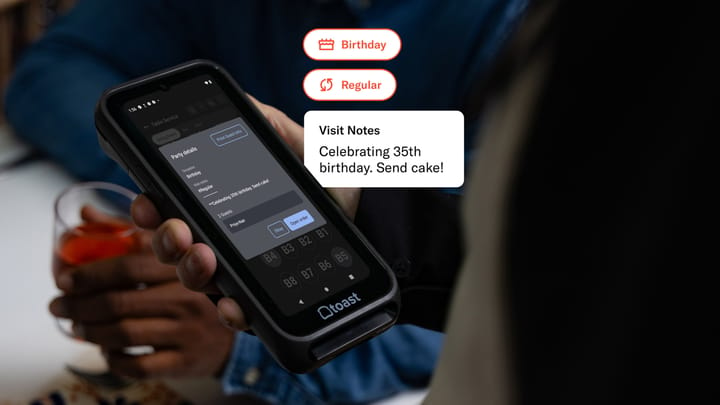
Square and Toast, two of the restaurant industry's dominant point-of-sale and management software platforms, are tightening their grips on the reservation ecosystem by deepening integrations with OpenTable and Resy respectively. These moves represent a fundamental shift in how restaurants access customer data and manage their operations.
Square's expanded partnership with OpenTable creates a direct pipeline between reservation data and Square's platform. Restaurants using both systems now gain unified customer intelligence. When a diner books through OpenTable, that information flows directly into Square's ecosystem, allowing operators to track spending patterns, dietary preferences, and visit frequency across both reservation and payment systems. This integration eliminates manual data entry and reduces the friction that has historically plagued restaurant tech stacks.
The benefits compound quickly. A chef at a mid-sized restaurant can now see that a customer with a history of wine pairings is arriving Thursday night, enabling smarter prep work and personalized service recommendations. Marketing teams can segment customers by booking behavior and spending patterns. Operations managers gain visibility into which reservation time slots drive the highest revenue per table.
Toast and Resy announced a parallel partnership that mirrors Square's strategy. Resy, owned by Booking Holdings, commands the high-end reservation market, particularly in major metros like New York and San Francisco. Toast's integration with Resy similarly consolidates reservation and point-of-sale data into a single view. For restaurants operating on Resy's platform, this means the same unified customer journey that Square offers through OpenTable.
The timing reflects broader consolidation in restaurant technology. Both Square and Toast face pressure from smaller, specialized operators while trying to become the central nervous system of restaurant operations. By owning the reservation-to-payment pipeline, these platforms increase switching costs. A restaurant deeply integrated into Square's OpenTable connection finds it harder to abandon either platform without rebuilding data workflows from scratch.
OpenTable and Resy occupy different market segments, which matters strategically. OpenTable dominates casual dining and mid-range restaurants with millions of monthly users. Resy specializes in fine dining and trendy concepts. This segmentation means Square and Toast can serve different customer bases without direct competition, at least for now.
The integrations also reflect changing diner expectations. Modern restaurants operate in a world where customers expect personalization. They want to be recognized, remembered, and offered relevant suggestions. These platform integrations finally give restaurants the tools to deliver that experience without hiring additional staff or implementing entirely separate systems.
There are efficiency gains too. Fewer duplicate systems mean lower costs, simpler training for restaurant staff, and better data accuracy. A reservation no-show automatically flags in the point-of-sale system. Customer notes from OpenTable or Resy flow into Toast and Square without manual input.
This consolidation does raise questions about data ownership and portability. When reservation and payment data converge within a single platform's infrastructure, restaurants lose leverage in negotiations with vendors. Switching costs increase. The industry may eventually pressure regulators to ensure restaurants can extract their data freely.
For now, these integrations represent a maturation of restaurant technology. Square and Toast are moving beyond being transactional tools and becoming strategic business intelligence partners. That shift empowers restaurants to operate smarter, but it also concentrates power among platforms that already control critical infrastructure.