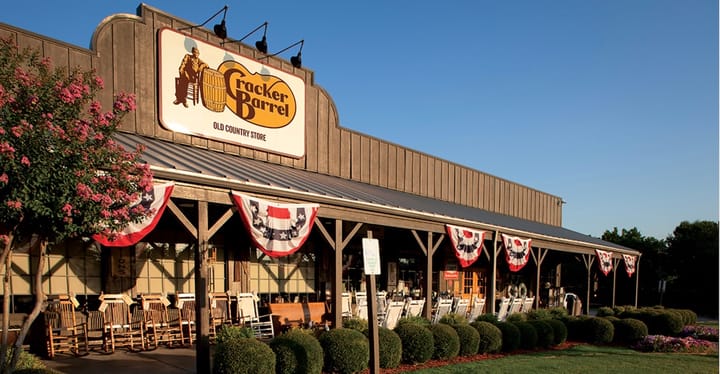
Cracker Barrel's recent misstep offers a hard lesson in brand identity. The casual dining chain, built on a specific cultural persona, attempted to broaden its appeal and lost sight of what its customers actually valued. Restaurants aren't neutral food delivery systems. They're selling atmosphere, values, and belonging.
Cracker Barrel built its empire on a particular aesthetic and ethos: rural Americana, nostalgia, and a specific worldview that resonated with its core demographic. For decades, this clarity worked. The chain knew exactly who it was and who it served. Every detail, from the store layout to the merchandise, reinforced that identity.
But when leadership tried to soften or shift that positioning, customers noticed immediately. The brand attempted to expand beyond its base, but in doing so, it diluted the very thing that made it distinctive. Diners who chose Cracker Barrel for its particular character felt abandoned. New customers didn't suddenly flood in because the brand had become generic.
This applies across the restaurant industry. Successful concepts thrive when they commit to a clear identity. Whether it's fine dining, fast casual, or quick service, customers choose restaurants for reasons beyond food quality. They're buying into a story, a community, a set of values reflected in staffing choices, sourcing practices, decor, and messaging.
The lesson extends to how restaurants communicate. Every decision signals something. Menu changes, redesigns, hiring announcements, social media messaging. All of it either reinforces or contradicts the brand promise.
Cracker Barrel's stumble reminds operators that abandoning your core identity to chase growth is often self-defeating. You alienate loyalists while failing to attract the audiences you're chasing. The restaurants that weather business cycles and competition are those with conviction about who they are and what they represent. Know your customer. Know yourself. Then sell that,