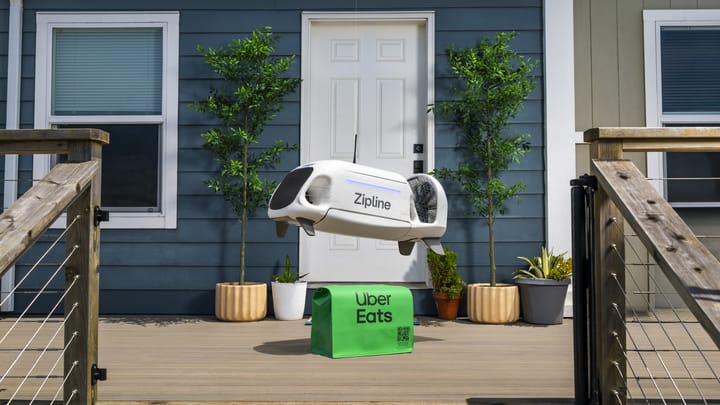
Uber has invested in Zipline and formed a partnership to expand drone delivery across the United States. The rideshare and delivery giant will use Zipline's autonomous aerial vehicles to transport food and other goods to customers, marking a significant step toward mainstream drone logistics in the restaurant and retail sectors.
Zipline operates battery-powered drones that can fly predetermined routes with minimal human intervention. The company has already deployed these systems in Africa and other markets. Now, with Uber's backing and resources, the technology moves into American cities where restaurant operators and retailers increasingly demand faster delivery options.
The partnership addresses a core challenge for delivery platforms. Traditional ground-based services face traffic congestion, driver shortages, and rising labor costs. Drones circumvent these problems by moving goods directly above city streets. Customers could receive orders in minutes rather than hours, fundamentally changing how restaurants fulfill delivery requests.
For restaurant owners, drone delivery presents both opportunity and complexity. Orders that travel by air require different packaging and temperature management than ground delivery. Restaurants near Uber's deployment zones will need to adapt workflows to support drone pickups. The service initially targets high-demand areas where density justifies the infrastructure investment.
Zipline's technology relies on charging stations and flight corridors approved by the FAA. The Federal Aviation Administration has gradually loosened restrictions on drone operations, allowing companies to test beyond-visual-line-of-sight flights in controlled environments. Uber's investment signals confidence in regulatory momentum.
This move mirrors similar bets by competitors. Amazon has invested heavily in Prime Air drones. DoorDash and other platforms are exploring aerial options. The companies betting on drones believe automation reduces costs and improves speed, both critical factors in the increasingly competitive delivery market.
The partnership reflects how technology reshapes restaurant operations at ground level. Kitchens built around delivery must optimize for speed and packaging. Staff training shifts toward drone