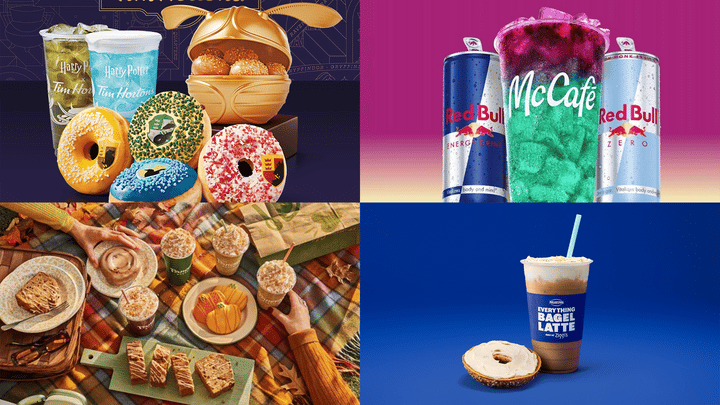
# Chain Restaurants Push Innovation Across Breakfast, Sandwiches, and Sweets
Quick-service restaurants are racing to refresh their menus as chains compete for customer attention in a crowded marketplace. Domino's, Chick-fil-A, McDonald's, A&W, Arby's, IHOP, Krispy Kreme, and Sweetgreen all rolled out new offerings recently, signaling how the industry adapts to shifting consumer tastes and seasonal demand.
Domino's continues its strategy of testing new pizza formats and specialty items designed to increase ticket size. The chain experiments with limited-time offerings that drive frequency and social media buzz. These tests matter because pizza delivery faces relentless competition from regional chains and third-party platforms like DoorDash and Uber Eats, which now control much of the delivery landscape.
Chick-fil-A, operating with a closed-on-Sunday model that limits its service hours, relies on chicken sandwich variations and limited-time offerings to maintain growth. The Atlanta-based chain's menu innovation keeps loyal customers returning and attracts new traffic during promotional windows. For a brand built entirely on chicken, differentiation through preparation methods, sauces, and pairing options becomes essential.
McDonald's menu expansion reflects the company's broader push into premium offerings and healthier options. The Golden Arches tests items across dayparts, from breakfast to dinner, fighting competition from brands like Starbucks on breakfast and Subway on sandwich credentials. McDonald's scale allows it to test nationally faster than competitors, making it a bellwether for what works across America.
A&W and Arby's both lean into their distinct identities. A&W emphasizes its rootbeer heritage and comfort-food positioning, while Arby's leans on its roasted meat advantage and argues it owns the sandwich category. Both face pressure from Chick-fil-A's expansion and newer QSR formats offering customization and premium ingredients.
IHOP's innovation centers on breakfast and all-day pancake offerings. As the largest pancake-house chain in America, IHOP must refresh its menu to compete with fast-casual breakfast spots like Sweetgreen and local bagel shops. Sweetgreen, a salad-focused chain, represents the direct competition IHOP addresses with healthier menu items and protein options.
Krispy Kreme's strategy involves limited-edition donut flavors and seasonal offerings that generate anticipation and repeat visits. The Charlotte-based doughnut chain competes with Dunkin' nationwide and local bakeries, making flavor innovation and scarcity marketing core to its playbook.
These menu additions reflect a broader industry pattern. Restaurants test aggressively in specific markets before rolling out nationally. Successful items become permanent or seasonal fixtures, while failures disappear quietly. The pace of innovation has accelerated as social media amplifies demand for newness and as third-party delivery platforms make it easier for customers to discover and order from multiple brands.
Consumer behavior has shifted post-pandemic. Diners now expect more variety, faster access to limited items, and menu customization. Chains that fail to innovate lose relevance to fast-casual competitors and independent restaurants, which move faster and adapt to local preferences.
For investors and franchisees, these menu rollouts signal where corporate leadership sees growth. High-volume items generate operational efficiency and profit. Specialty or premium items justify higher prices and attract different dayparts. The restaurants winning right now offer both reliable core menus and reasons to visit repeatedly through innovation.