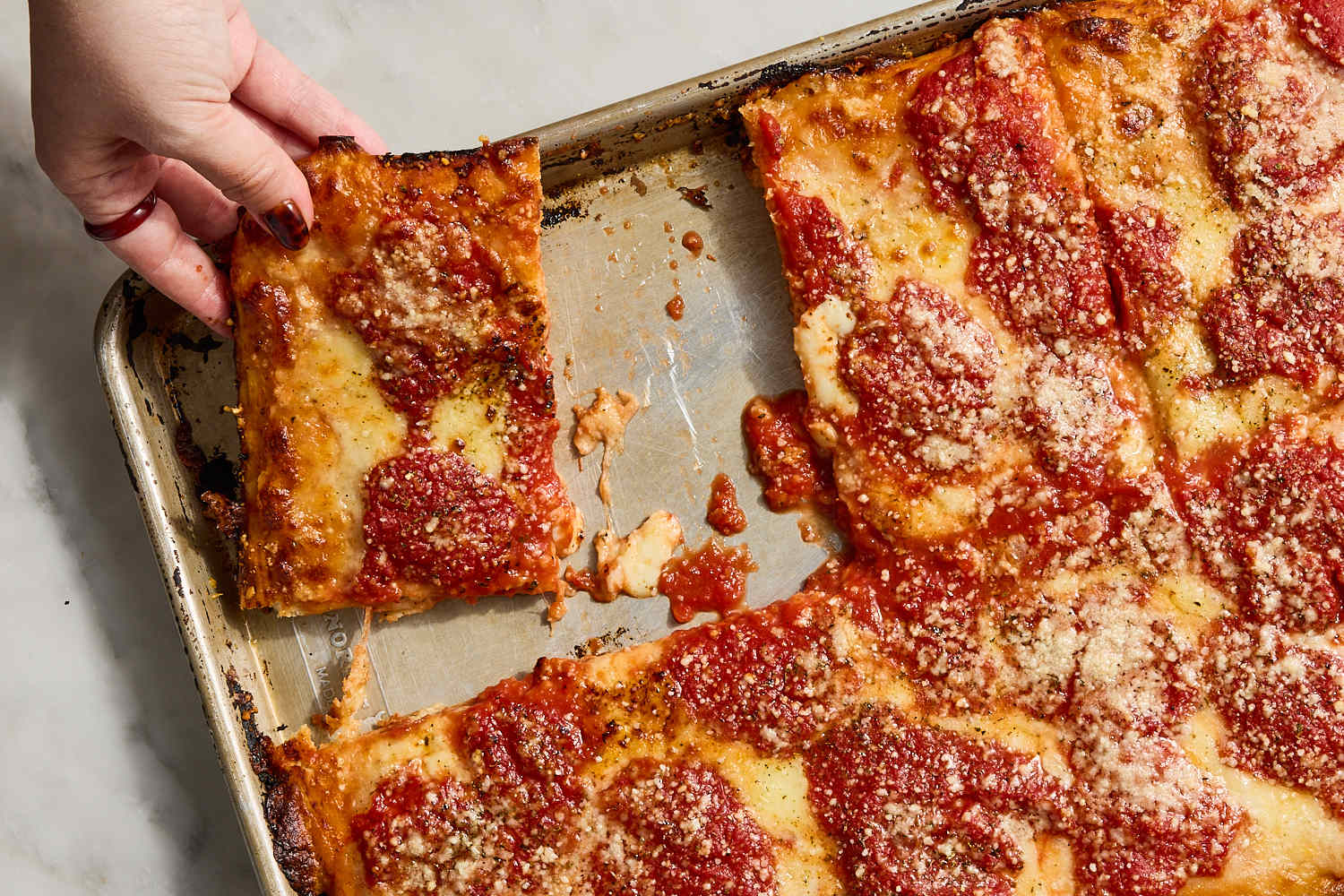
Sicilian pizza defies easy definition, which explains why American pizzerias often muddle it with grandma-style pizza. Both emerge square from the oven, but they diverge sharply in texture and technique.
In Sicily, locals call it sfincione. The authentic version builds on a thick, airy dough that ferments and rises like focaccia, creating a spongey crumb inside. The topping strategy stays minimal and restrained. A thin layer of red sauce covers the base, anchovy fillets dot the surface (though not universally), and breadcrumbs scatter across the top for crunch. Cheese plays a supporting role, never dominating the pie.
American pizzerias frequently conflate Sicilian-style with grandma-style pizza, a mistake rooted in their shared square shape. Grandma pizza, however, trades thickness for density. It uses unfermented dough that bakes thin and compact, creating a crisper, chewier bite. The approach yields speed over complexity.
True Sicilian sfincione demands time. The fermentation develops flavor and structure, turning simple flour and water into something textured and alive. The breadcrumb topping adds substance without heaviness, while anchovies provide umami depth that doesn't announce itself loudly.
Understanding this distinction matters for home bakers and pizza hunters alike. If you crave that focaccia-like fluff with subtle fish undertones and the textural contrast of toasted breadcrumbs, you want sfincione. If you prefer tight, chewy dough with aggressive fermentation shortcuts, grandma-style delivers faster gratification.
The confusion reflects how immigrant Italian cooking evolves in America. Regional dishes get collapsed into convenient categories, their origins blurred across generations. Yet sfincione's specific identity persists in Brooklyn kitchens and beyond, as