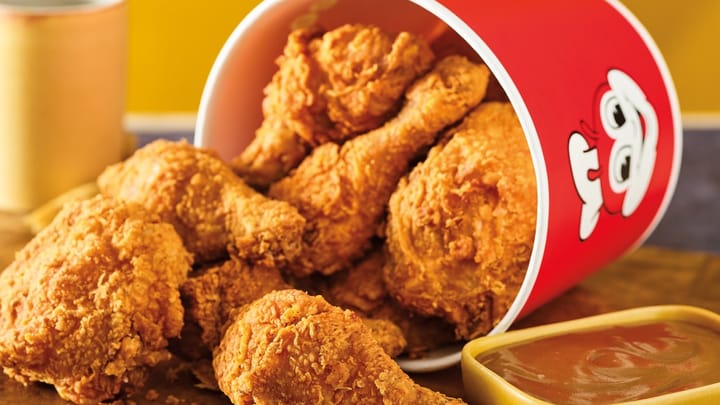
Jollibee's U.S. expansion is accelerating, with the Philippines-based chain approaching $5 million in average unit volume across its American locations. Maribeth Dela Cruz, the chain's president, attributes this growth to specific operational and menu strategies that distinguish Jollibee from established competitors like Chick-fil-A and Popeyes.
The chain's signature move centers on its "Chickenjoy" product line, which combines bone-in and boneless chicken pieces with a proprietary breading formula that reflects Filipino flavor profiles. This approach captures a demographic gap between mass-market chicken chains and regional players. Jollibee pairs Chickenjoy with sweet and savory sides, including spaghetti with a distinctly sweet tomato sauce that resonates with Filipino-American communities and adventurous eaters seeking alternatives to standard fast-casual offerings.
Dela Cruz emphasizes localized marketing and community engagement as core differentiators. Rather than compete on price alone, Jollibee positions itself as a cultural brand that honors Filipino heritage while remaining accessible to mainstream American audiences. The chain maintains higher ingredient quality standards in its U.S. locations compared to typical quick-service competitors, justifying premium pricing.
Expansion strategy focuses on high-density Filipino-American neighborhoods before moving into broader suburban markets. This allows Jollibee to build brand loyalty among core customers before scaling nationally. The chain has grown its U.S. footprint significantly since entering the market, with locations now spanning major metropolitan areas and secondary markets.
The $5 million AUV benchmark indicates strong unit economics that exceed many category peers. This performance reflects both the underserved appetite for Filipino fast food and Jollibee's ability to adapt its global playbook for American consumers without diluting brand identity. As the chicken category becomes increasingly saturated with new entrants