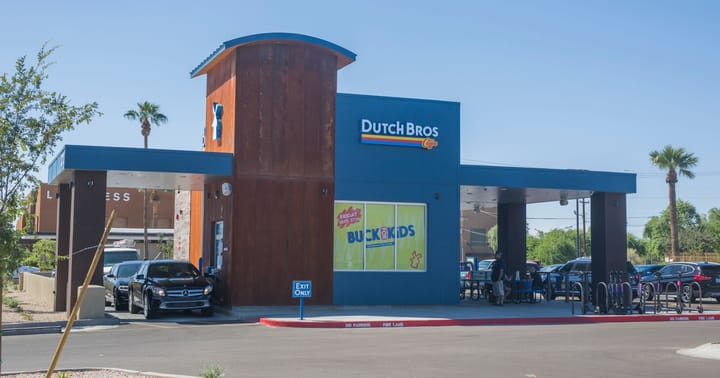
Dutch Bros Coffee, the rapidly expanding drive-thru beverage chain, is acquiring up to 65 locations from the defunct Salad and Go chain across Arizona, Nevada, Oklahoma, and Texas. The deal targets Salad and Go's real estate assets following the quick-service salad concept's bankruptcy.
This acquisition reflects Dutch Bros' aggressive expansion strategy as it scales beyond coffee into adjacent daypart categories. The Oregon-based chain has demonstrated impressive growth momentum, particularly in Western markets. By absorbing Salad and Go's footprint, Dutch Bros gains established drive-thru infrastructure in high-traffic corridors without building new locations from scratch.
Salad and Go's collapse underscores the challenges facing fast-casual salad concepts. The chain struggled to maintain profitability despite strong initial momentum, ultimately unable to compete with established quick-service rivals and the rising costs of fresh produce. Its demise leaves a gap in the drive-thru healthy eating segment.
Dutch Bros' acquisition plays a calculated hand. The beverage chain enters markets already primed for drive-thru formats and captures existing customer traffic patterns. Whether it will convert these spaces into coffee-focused locations, experimental formats, or complementary food offerings remains unclear. The real estate value likely drove the decision more than Salad and Go's operational model.
This move positions Dutch Bros within a growing segment of beverage chains expanding their menus and real estate strategies. The company has rapidly scaled from a regional West Coast player to a national competitor, challenging established chains like Starbucks through aggressive unit growth and customer loyalty programs.
The acquisition also signals confidence in Dutch Bros' ability to manage higher unit volumes and operational complexity. Successfully integrating 65 locations requires sophisticated supply chain management, training infrastructure, and real estate expertise. For Dutch Bros investors, the deal validates the chain's capacity to execute at scale while maintaining the operational consistency needed for continued public