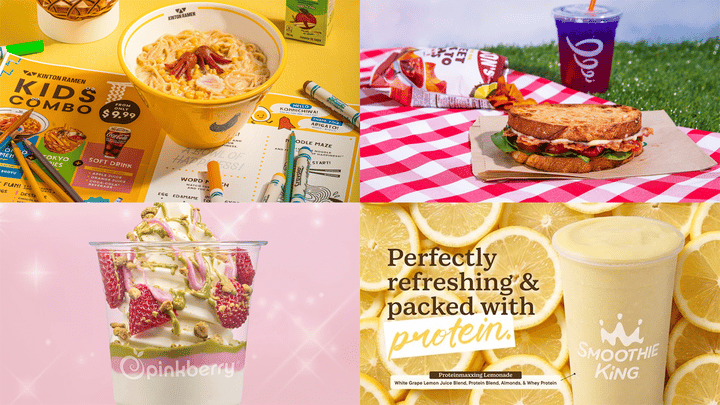
Quick-service and casual dining chains are rolling out fresh menu items across categories this season. Wendy's continues its strategy of limited-time offerings to drive traffic, while Starbucks leverages seasonal flavor trends to capture beverage spending. The Cheesecake Factory, known for an expansive menu, adds new plates to compete in an increasingly crowded casual dining space.
Bonchon, the Korean fried chicken chain expanding across North America, introduces items that reflect growing consumer appetite for Asian-inspired fast casual food. Cousins Subs, the Wisconsin-based sandwich concept, innovates on its core offering to stay relevant against national competitors. Dave and Buster's, blending entertainment with dining, refreshes its menu to encourage repeat visits among its demographic.
Jamba adds beverages and snacks to capitalize on the health-conscious smoothie trend. Krispy Kreme, the doughnut powerhouse, develops seasonal and limited offerings that create urgency and social media buzz.
These moves reflect a broader industry pattern. Chains compete not just on price but on novelty and speed-to-market for new flavors. Menu innovation serves multiple functions: it generates press coverage, encourages social media sharing, and gives existing customers reasons to visit more frequently. The strategy works particularly well for established brands with loyal customer bases.
The frequency of menu rotations has accelerated as chains recognize that limited-time items create scarcity appeal. Whether it's a coffee drink at Starbucks, a chicken sandwich at Bonchon, or a dessert at Cheesecake Factory, the playbook remains consistent. Launch, promote through digital channels, capture the window of consumer interest, then rotate to the next item.
For consumers, this means constant change and discovery. For chains, it's become essential to growth in mature markets where foot traffic and customer spending plateau without regular menu