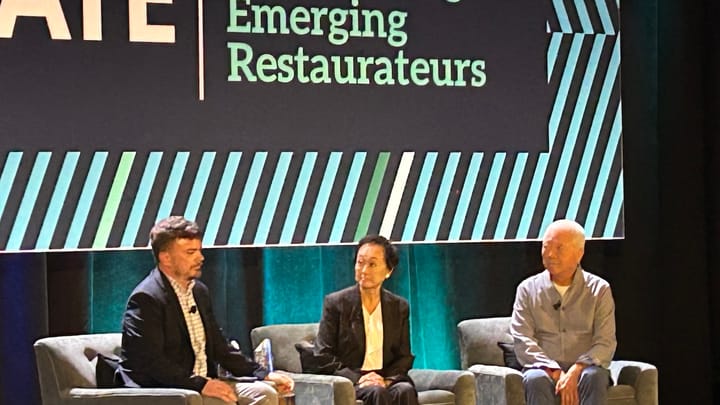
Peggy and Andrew Cherng, the husband-and-wife founders of Panda Express, outlined their company philosophy at the CREATE conference, emphasizing what they call the "Panda Way." The approach centers on three pillars: love for people, love for guests, and love for community.
The Cherngs built Panda Express from a single location in Glendale, California in 1983 into America's largest Chinese restaurant chain, with over 2,300 locations. Their philosophy reflects decades of operational thinking about how to scale without sacrificing human connection.
Peggy Cherng, co-founder and chief executive officer, and Andrew Cherng, co-founder and executive chairman, presented their framework during the industry conference. The "Panda Way" extends beyond typical corporate messaging. It shapes everything from employee treatment to menu innovation to expansion strategy.
The emphasis on people acknowledges that restaurant success depends on workforce stability and morale. The focus on guests reflects the chain's commitment to consistency and quality across thousands of locations serving diverse American communities. The community component addresses Panda Express's role in neighborhoods, from charitable giving to local hiring practices.
This messaging arrives as the fast-casual dining sector faces labor shortages and competitive pressures. Panda Express has navigated these challenges partly through its family-run structure and long-term vision. The Cherngs have avoided the typical private equity playbook of aggressive cost-cutting, instead reinvesting profits into restaurant improvements and employee benefits.
The "Panda Way" also reflects evolving consumer expectations. Diners increasingly support businesses that demonstrate authentic values beyond profit. Panda Express has capitalized on this by highlighting its founding story, Chinese-American heritage, and philanthropic commitments through its charitable foundation.
The CREATE conference appearance gave the Cherngs a platform to articulate their leadership philosophy to