Khalid Mashriqi built Shah's Halal into a global force by scaling what started as a New York food cart into a chain spanning 130 U.S. locations and 70 worldwide. The CEO recognized early that Afghan-inspired halal street food occupied a gap in the American fast-casual market, where demand for authentic, affordable, and ethically sourced meat options continued climbing.
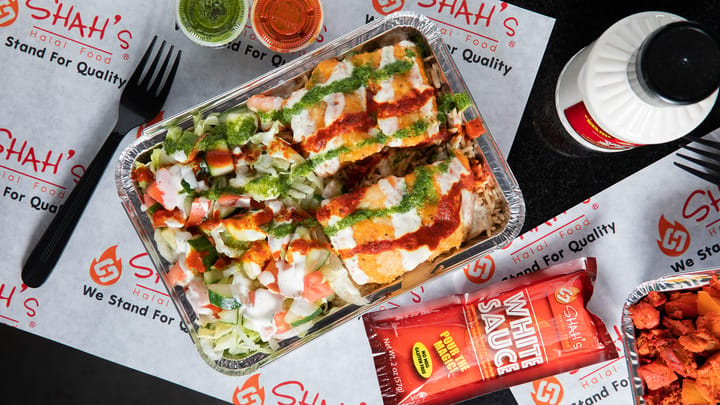
Shah's Halal centers its menu around familiar comfort formats. Platters and sandwiches feature lamb, chicken, and beef cooked with Afghan spices and served over rice or naan. The 100% halal certification matters both culturally and commercially. Halal-conscious consumers, spanning Muslim and non-Muslim demographics alike, seek transparency in sourcing and preparation. Shah's Halal delivers that consistency across every location.
The expansion strategy mirrors successful fast-casual playbooks. Individual carts proved the concept worked. Small storefronts tested scaling operations. Once unit economics proved solid, Mashriqi accelerated franchise development across major metros. The chain now competes directly with Chipotle and Sweetgreen by offering similar customization and speed at comparable price points, but with halal meat as the differentiation engine.
International growth signals confidence in the brand's portability. The model works because Afghan cuisine balances bold flavors with straightforward execution. Grilled meat, rice, sauce, bread. Nothing requires exotic equipment or lengthy prep times. Franchisees can replicate consistency quickly.
The halal market itself is reshaping American food culture. Chains like Doner Kebab House and Mediterranean restaurants have thrived by meeting this demand. Shah's Halal simply did it first at scale with a devoted CEO who understood both the cultural importance and the business opportunity. By treating halal certification as a feature, not a niche marker, Mashriqi positioned