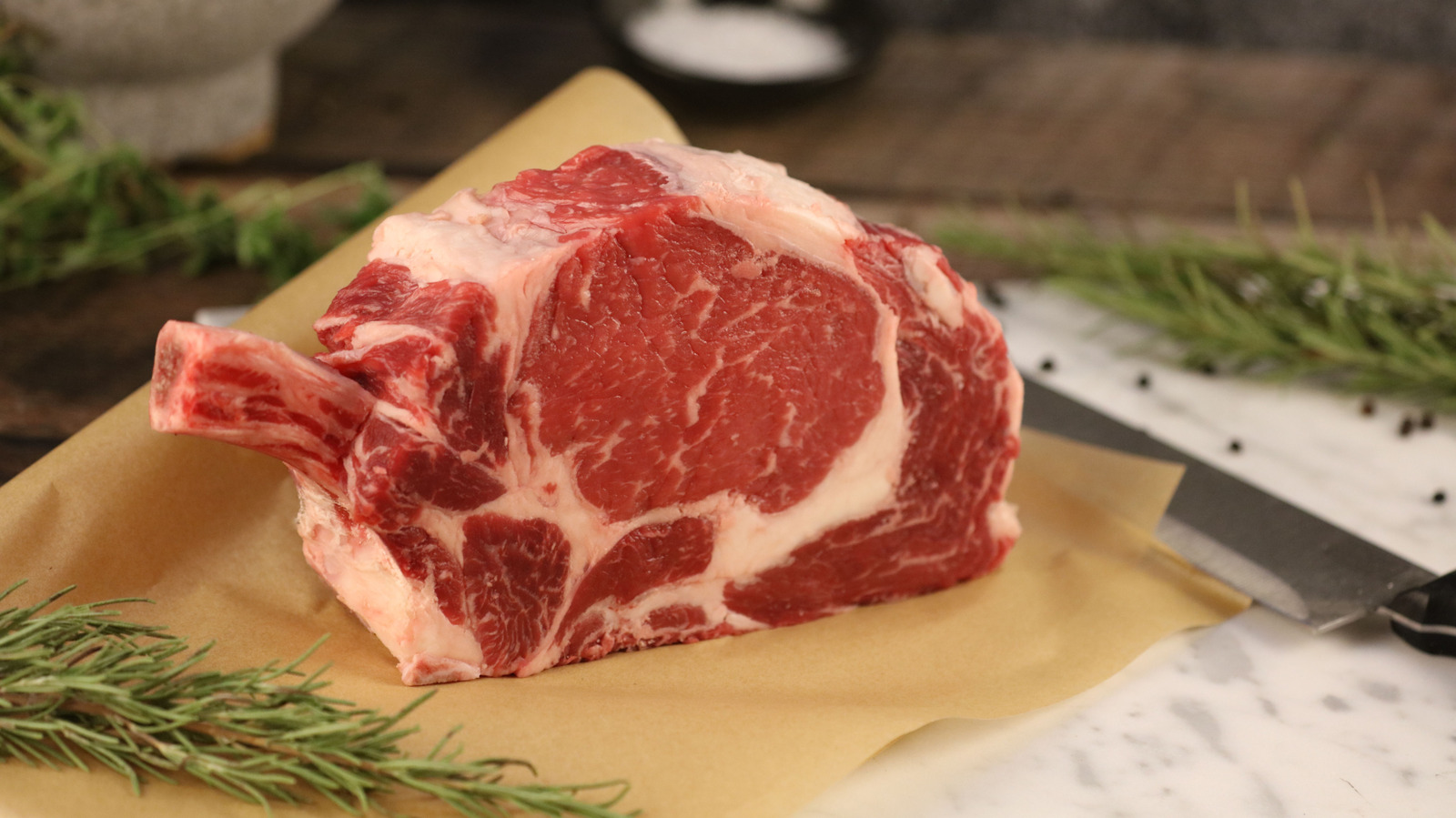
# Cowboy Steak vs Ribeye: Understanding the Cut
The cowboy steak and ribeye spark genuine debate among steak enthusiasts, yet the distinction comes down to two concrete factors: bone and sourcing.
A ribeye is a boneless cut from the rib section, prized for its marbling and tenderness. Butchers remove the bone before packaging, creating the familiar oval shape you find at most steakhouses and butcher counters. This versatility makes ribeye the default choice for home cooks and restaurants alike.
The cowboy steak takes the same muscle but keeps the rib bone attached, creating what some call a bone-in ribeye. This bone adds weight, visual drama, and a slight advantage in flavor. The bone conducts heat differently during cooking, creating a subtle texture gradient between the meat near the bone and the outer sections. Many butchers cut cowboy steaks thicker than boneless ribeyes, typically one and a half to two inches, which accommodates the bone and allows for better searing.
Cooking methods differ accordingly. Boneless ribeyes work well for quick, high-heat searing followed by finishing in the oven. Cowboy steaks benefit from the reverse sear technique. Start them slowly in a low oven around 275 degrees Fahrenheit until the internal temperature reaches 110 degrees, then sear aggressively in a hot cast-iron skillet for a dark crust. The bone provides a natural handle and radiates heat throughout the meat as it rests.
Price distinguishes them as well. The cowboy steak commands a premium, often 20 to 30 percent more than boneless ribeye, thanks to the added bone weight and the butcher's skill required to cut it cleanly.
Both cuts deliver the fat content and flavor that ribeyes are known for. The choice