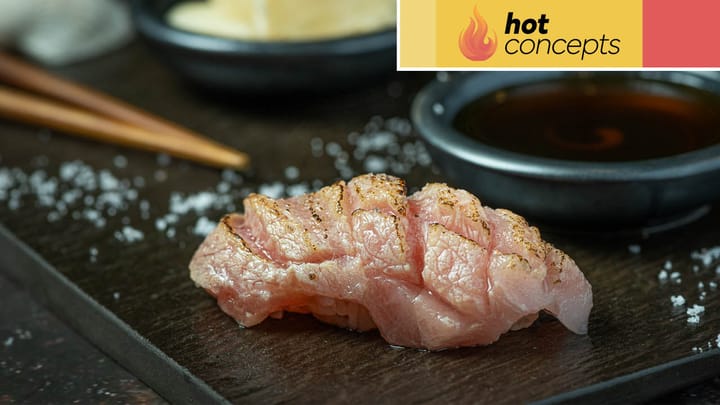
Sushi by Bou challenges the omakase formula by stripping away the exclusivity. The restaurant model relies on compact footprints in secondary locations rather than prime real estate, slashing overhead and passing savings to diners seeking chef's counter experiences at accessible price points.
Omakase traditionally meant high-touch, high-cost affairs. Tokyo's finest sushi bars charge hundreds per seat. Sushi by Bou inverts this equation. By occupying small, underutilized spaces that larger operators overlook, the concept avoids the rent premiums that inflate omakase pricing. This architectural advantage translates directly to the menu. Diners experience the same ritualistic format—the chef orchestrating each nigiri course, the progression of flavors, the intimate counter dynamics—without the three-figure bills.
The strategy reflects broader restaurant industry shifts. Labor, rent, and ingredient costs have compressed margins across fine dining. Concepts that thrive now optimize real estate aggressively. Sushi by Bou's founder recognized that secondary locations don't diminish the omakase experience itself. They simply reduce the financial gatekeeping.
The model also addresses changing consumer behavior. Post-pandemic diners seek experiences but remain cost-conscious. A $60 omakase hits differently than a $150 version, especially for younger eaters discovering sushi chef culture. Sushi by Bou captures this demographic by removing the wealth requirement from the equation.
This approach carries implications beyond sushi. It suggests luxury dining can democratize through operational efficiency rather than ingredient compromise. The chef still sources carefully. The rice is still properly seasoned. The technique remains uncompromised. What shifts is the business model's burden.
The concept's success hinges on execution at scale. Opening multiple locations amplifies the value of the model while testing whether consistency holds when demand grows. For now