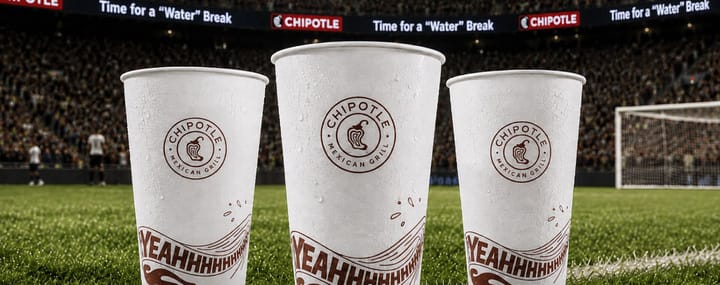
Chipotle launches a buy-one-get-one promotion during the FIFA World Cup final, capitalizing on the tournament's quirky drinking culture. The fast-casual chain timed the giveaway to match soccer's official hydration breaks, turning a practical match element into marketing fodder.
The promotion plays on a familiar stadium phenomenon. Fans attending World Cup matches frequently exploit the free water cup policy by secretly filling them with lemonade or other beverages, a tongue-in-cheek workaround that tournament organizers tolerate. Chipotle's creative team spotted this cultural moment and built a campaign around it, framing the BOGO offer as a nod to World Cup fans who stretch the rules on what counts as a "water" cup.
The strategy reflects how quick-service restaurants capitalize on major sporting events. World Cup viewership drives foot traffic during match broadcasts, and restaurants use limited-time promotions to capture that energy. By tying the offer to the final—the tournament's highest-stakes game—Chipotle targets peak engagement when viewers are most invested and likely to grab food while watching.
The execution shows sophisticated audience targeting. Soccer fans, particularly World Cup devotees, skew younger and more diverse than general restaurant demographics. Chipotle's playful reference to stadium drink-cup culture demonstrates the brand understands its audience's sense of humor and shared experiences around the sport.
BOGO promotions remain Chipotle's bread-and-butter tactic for driving traffic. The chain frequently runs similar offers tied to cultural moments, holidays, or app-exclusive deals. These discounts maintain customer acquisition costs while building loyalty through timely relevance.
The World Cup final takes place in December (Qatar's climate prevents summer play), creating unusual timing for a restaurant promotion. Chipotle's flexibility in running off-season sports tie-ins shows how contemporary chains