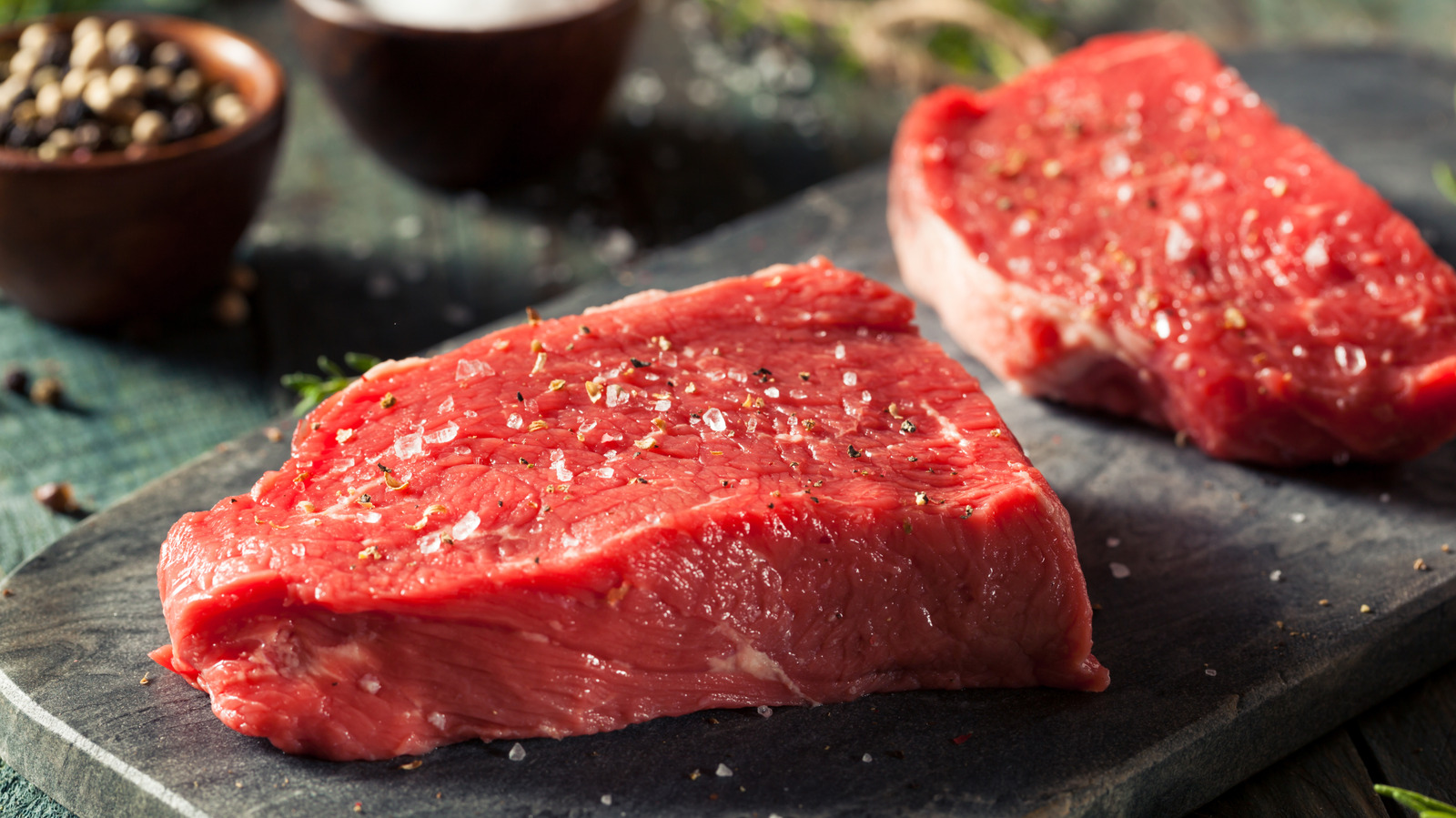
# Take Store-Bought Steaks To The Next Level And Do This At Home
Cooking restaurant-quality steak at home requires just a handful of technique adjustments and patience. The gap between mediocre and exceptional beef narrows significantly when you understand the fundamentals.
Start with selection. Choose steaks with visible marbling, the white fat running through the meat. Ribeyes and New York strips deliver consistent results for home cooks. Thickness matters, too. A one-and-a-half-inch minimum allows the exterior to brown properly before the interior overcooks.
Pat your steak completely dry before cooking. Moisture becomes the enemy of browning. Salting the meat 40 minutes ahead of time draws out liquid initially, then reabsorbs it, seasoning the steak throughout. Skip this step and save salt for right before cooking.
Your cooking vessel determines success. Cast iron or stainless steel pans retain heat far better than nonstick surfaces. Get the pan smoking hot. This creates the Maillard reaction, that caramelized crust that distinguishes restaurant steaks from boiled beef.
The butter-basting technique separates amateurs from competent cooks. After searing both sides, add butter, crushed garlic, and fresh thyme to the pan. Tilt the pan and continuously spoon that foaming butter over the steak. This bastes the meat while adding rich flavor.
Temperature control finishes the job. Use an instant-read thermometer. Pull the steak at 120 degrees Fahrenheit for rare, 130 for medium-rare. The meat continues cooking as it rests, rising another 5 degrees.
Resting cannot be skipped. Let your steak sit undisturbed for five to ten minutes after cooking. This allows carryover cooking to finish ev