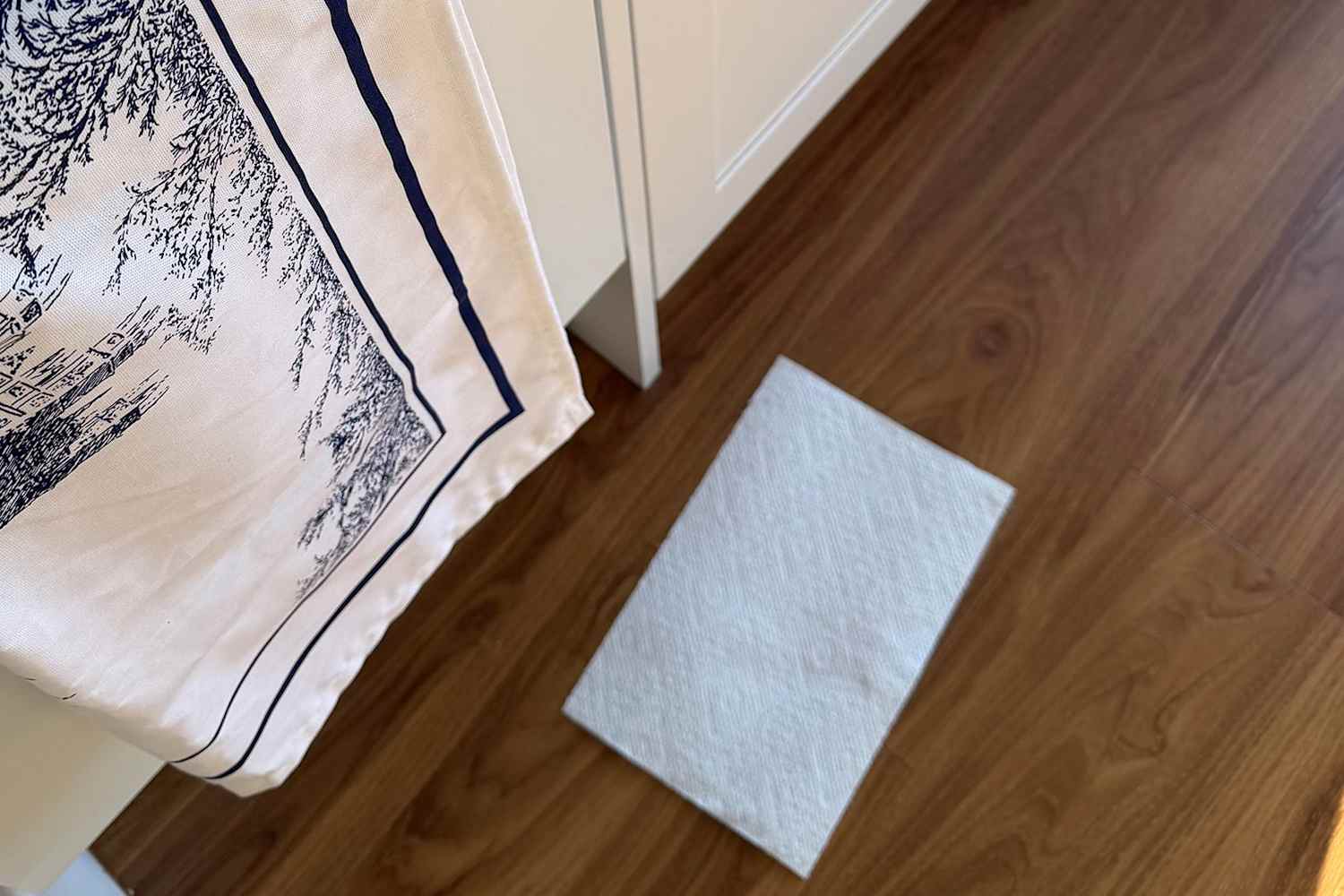
A simple kitchen hack has gained traction among home cooks seeking to manage one of cooking's messier realities. Placing a paper towel on the kitchen floor before cooking absorbs spills, splatters, and drips that inevitably occur during food preparation and cleanup.
The technique works by creating an absorbent barrier in high-traffic zones where cooks stand while working. Rather than watching oil, water, or food debris spread across tile or hardwood, the paper towel soaks up liquids immediately upon contact. This prevents the common hazard of slippery floors that can lead to accidents while carrying hot pans or moving between the stove and sink.
The hack addresses a real pain point in kitchen management. Professional kitchens have long used floor mats for safety and sanitation, but home cooks rarely adopt similar practices. A paper towel costs pennies and requires no special equipment or installation. It sits flat against the floor, creating no tripping hazard, and can be replaced throughout the day as needed.
The method proves especially useful during ambitious cooking projects that demand multiple stations and frequent movement. A dinner party preparation, holiday meal, or day spent testing recipes generates numerous spills. Rather than frantically wiping up every accident with dish towels, cooks simply step onto a fresh paper towel and continue working.
Beyond practicality, the hack reflects broader kitchen intelligence. Good cooks anticipate mess and build systems to manage it. This separates chaotic cooking from organized cooking. The approach also saves time. Less floor cleanup at day's end means more time to enjoy meals or rest.
The paper towel method works best when positioned strategically. Placing it directly in front of the stove catches splatters. Positioning one near the sink absorbs overflow from washing and rinsing. Multiple towels in different zones maximize coverage.
This kind of domestic innovation spreads