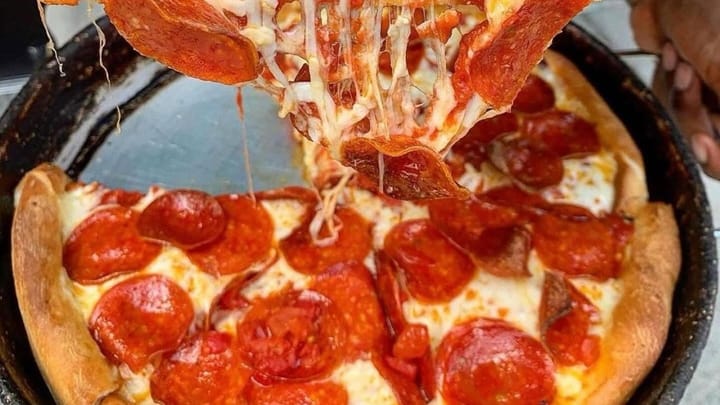
Armand's Pizzeria & Grille shuttered its final location, ending a 51-year run in the Washington, D.C. region. The deep-dish pizza chain once operated 14 restaurants across D.C., Maryland, and Virginia at its peak, making it a fixture in Mid-Atlantic dining for half a century.
The closure marks the end of an era for a restaurant that built its reputation on Chicago-style deep-dish pizza in a market traditionally dominated by New York-style slices and casual neighborhood joints. Armand's competed in an increasingly crowded pizza landscape where established chains like Domino's and Papa John's, alongside newer artisanal pizzerias, captured market share and customer attention.
The chain's decline reflects broader challenges facing regional restaurant concepts. Independent and semi-regional chains face mounting pressure from rising labor costs, real estate expenses, and supply chain volatility. Competition from national chains with greater resources and brand recognition compounds these pressures. Many regional pizzerias built in the 1970s and 1980s struggle to adapt to changing consumer preferences and delivery-first ordering models that favor established digital ecosystems.
Armand's faced the challenge of maintaining relevance across multiple decades while operating from a relatively small footprint. Fourteen locations required substantial operational infrastructure without the scale advantages enjoyed by national chains. The gradual closure of individual Armand's locations over recent years signaled the chain's inability to sustain its business model in contemporary restaurant economics.
The disappearance of Armand's Pizzeria & Grille removes a local institution from the Mid-Atlantic dining scene. Its closure joins a wave of regional restaurant closures that have accelerated since the pandemic disrupted the industry. For longtime customers in D.C., Maryland, and Virginia, the chain represented a specific style of pizza and casual dining experience that cannot easily be replicated by national