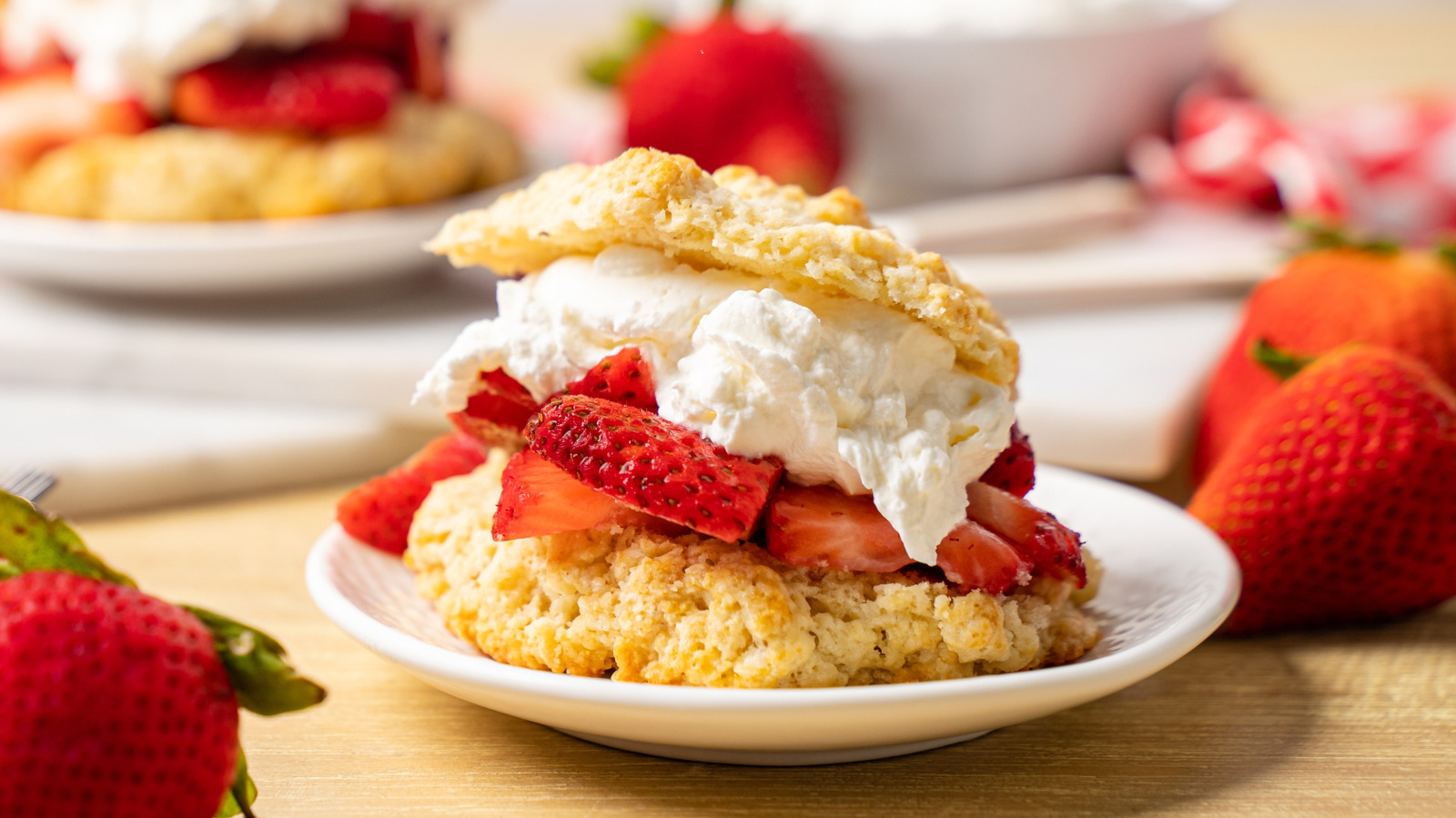
A proper strawberry shortcake demands precision, not improvisation. Professional bakers have refined the technique over decades, and ten key principles separate the mediocre from the exceptional.
Start with the cake itself. Use room-temperature eggs and butter for better emulsification, creating a tender crumb that absorbs whipped cream without becoming soggy. Sift your dry ingredients twice to eliminate lumps and incorporate air. The cake should bake until a toothpick comes out clean, but not a second longer. Overbaking dries out the delicate sponge.
For the strawberries, choose fruit at peak ripeness. Macerate them with sugar two to three hours before assembly, allowing the berries to release their juice while remaining structurally intact. This concentrated syrup becomes the glue binding all components together. Slice berries uniformly so each spoonful delivers consistent flavor and texture.
The whipped cream requires cold equipment. Chill your bowl and beaters in the freezer before whipping heavy cream to soft peaks, not stiff peaks. Whip too far and you risk breaking down the fat structure, creating a grainy, separated texture. Sugar added at the end prevents overwhipping.
Assembly timing matters enormously. Layer the shortcake components only two to three hours before serving. Earlier and the cake absorbs excess moisture, becoming mushy. Later and the cream separates from the fruit juice.
Temperature control throughout the entire process determines success. Keep strawberries and cream refrigerated until the moment you build the cake. A warm kitchen accelerates decay and wilting.
Professional bakers insist on quality ingredients. Butter should be European-style with higher fat content. Vanilla extract must be pure, not imitation. Strawberries sourced locally and seasonally trump imported berries shipped weeks before reaching your kitchen.
These techniques