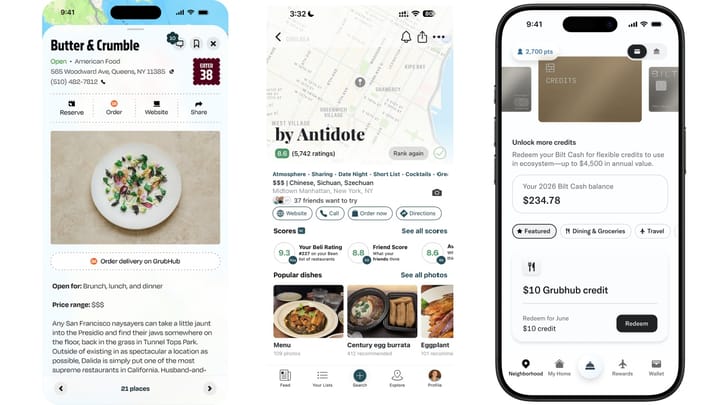
Grubhub expanded its distribution network by integrating with restaurant discovery platforms and smart home services. The delivery giant now appears within Eater, Beli, and Amazon's Alexa+, letting diners order directly from reviews and recommendations without leaving those apps.
The partnerships represent Grubhub's strategy to embed itself into existing discovery habits. When a user reads about a restaurant on Eater or browses recommendations on Beli, they now complete the transaction within those platforms instead of switching apps. Grubhub handles fulfillment while the discovery platforms collect commissions on orders placed through their channels.
Amazon's Alexa+ integration marks another front in the voice commerce battle. Customers can search restaurants by cuisine, neighborhood, or price point through Alexa, then order delivery without typing. The partnership also includes Bilt, a payment rewards platform targeting affluent diners, which now offers Grubhub orders as a redemption option.
These integrations reflect how delivery services compete less on food quality and more on frictionless access. Third-party platforms like Eater and Beli control significant traffic and user trust in restaurant recommendations. By partnering rather than building competing review features, Grubhub reduces customer acquisition costs and reaches people mid-discovery rather than starting searches from scratch.
For restaurants, this expands where their menus appear without added complexity. Orders flow into existing POS systems regardless of platform origin. The trade-off involves paying commissions to multiple partners, a cost restaurants absorb or pass to diners through inflated menu prices on delivery.
The moves intensify pressure on DoorDash and Uber Eats to expand beyond their core apps. Voice ordering and embedded checkout have matured from novelties to expected features. Grubhub's integrations signal that winning delivery means being everywhere customers already look, not pulling them