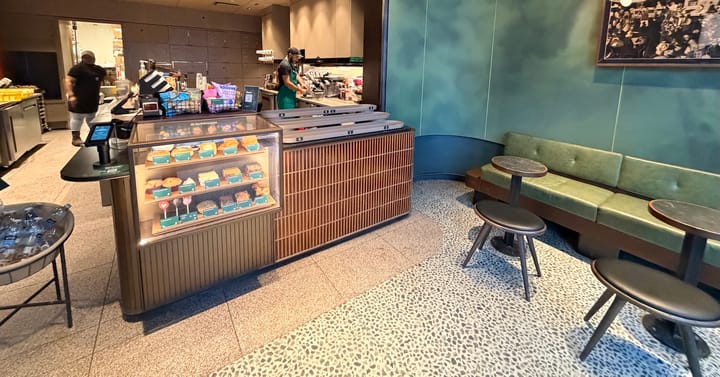
Starbucks is betting on a real estate strategy that breaks from decades of coffee-shop convention: smaller stores can generate bigger growth. The chain plans to open 5,000 new U.S. locations, with potential for as many as 10,000, by shrinking its typical footprint and focusing on drive-thru formats that require less square footage.
This shift addresses a fundamental problem. Traditional Starbucks stores occupy 1,500 to 1,800 square feet, a footprint that limits where the company can expand. Dense urban neighborhoods, suburban strip malls, and underserved markets often lack properties large enough to accommodate a full-scale location. Smaller formats solve this constraint.
The new model strips away the community seating and lounge areas that defined the Starbucks experience for two decades. Instead, these locations prioritize the drive-thru window and mobile ordering, accommodating customers who want coffee fast, not a third place to linger. The company recognizes that consumer behavior has shifted. Mobile orders now represent a substantial portion of Starbucks transactions, making square footage for seating less essential to profitability.
The strategy also improves unit economics. Lower rent, reduced labor costs for maintaining large spaces, and faster throughput in drive-thru-centric stores all boost margins. For Starbucks, this means opening locations in places competition or real estate costs previously made impossible. A small drive-thru in a highway rest stop or a compact corner unit in a dense urban neighborhood becomes viable.
The risk is brand dilution. Starbucks built its identity partly on atmosphere and hospitality. Removing that from thousands of new locations could reshape how customers perceive the brand. Younger consumers especially may view smaller, utilitarian stores as stripped-down versions of the original.
Still, growth matters more than nostalgia in today's