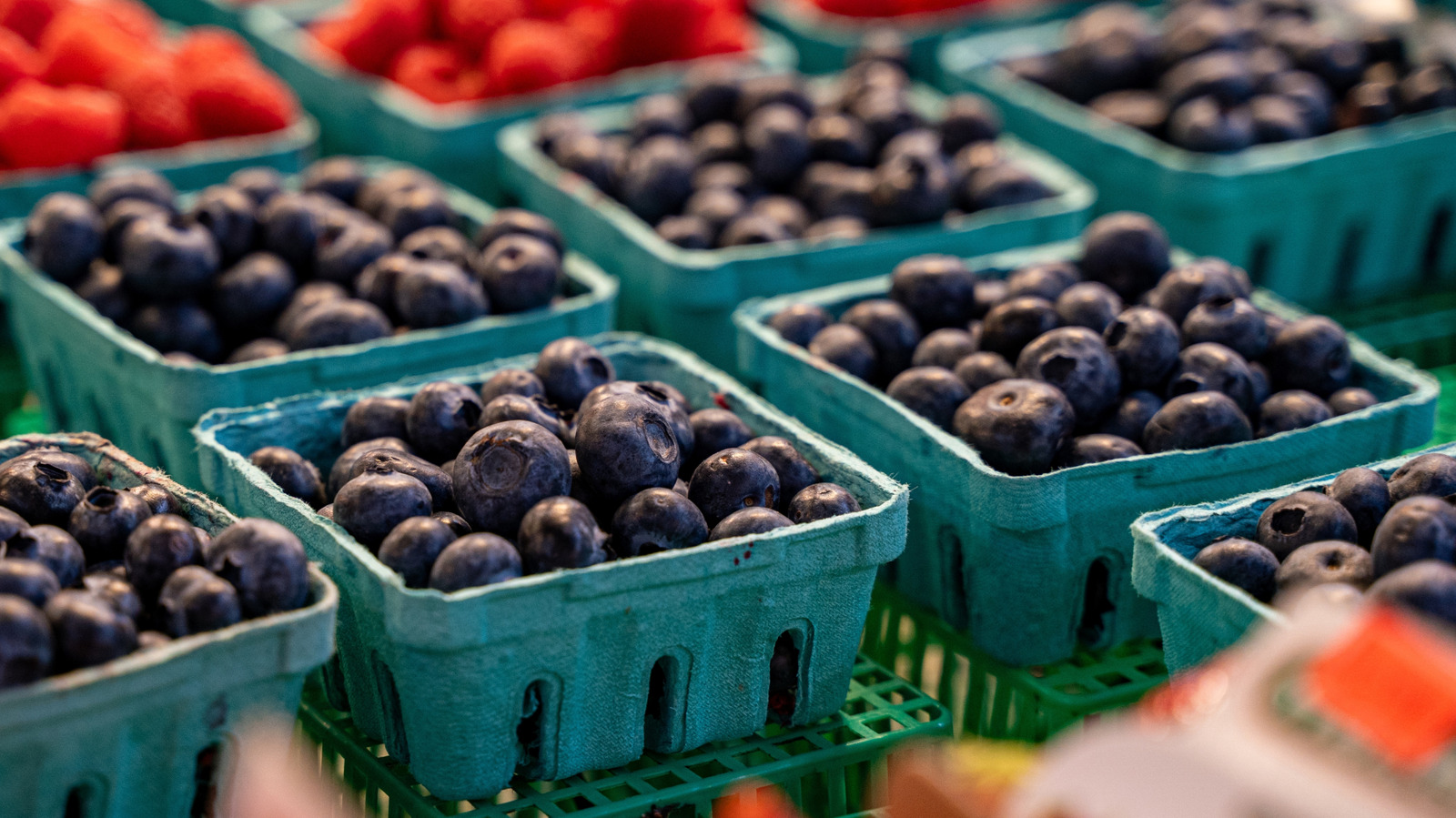
# The Blueberry Myth You Need To Stop Believing At The Grocery Store
Blueberries sit in the produce section with a reputation built on half-truths. The most persistent myth involves their color. Many shoppers believe that deeper blue berries are always riper and sweeter than lighter-colored ones. This assumption drives purchasing decisions and leaves people disappointed when a dark blueberry tastes bland while a lighter one bursts with flavor.
The truth is more nuanced. Blueberry color depends on the variety, not ripeness alone. Some cultivars, like the Duke variety, naturally produce lighter blue berries even when fully mature. Others, like the Jersey variety, develop darker skins. A blueberry that looks pale might actually be perfectly ripe and packed with sugar.
What matters more than color is the waxy coating, called bloom, that sits on the berry's surface. A heavy bloom indicates minimal handling and better freshness. Berries should feel firm to the touch, not soft or mushy. If they roll around loosely in the container rather than sticking together, they're drier and have lost moisture.
Smell offers another clue that most shoppers ignore. A ripe blueberry releases a subtle sweet aroma. The package should smell fresh and fruity, not sour or fermented.
The lesson here shifts how you shop. Stop fixating on color as your primary selector. Instead, examine the bloom, check firmness, and lean toward containers where berries feel substantial and smell pleasant. This approach works whether you're buying blueberries for muffins, smoothie bowls, or eating straight from the pint.
By understanding how different blueberry varieties look when ripe, shoppers can finally stop wasting money on flavorless berries selected purely by their appearance. The best blueberries come from informed