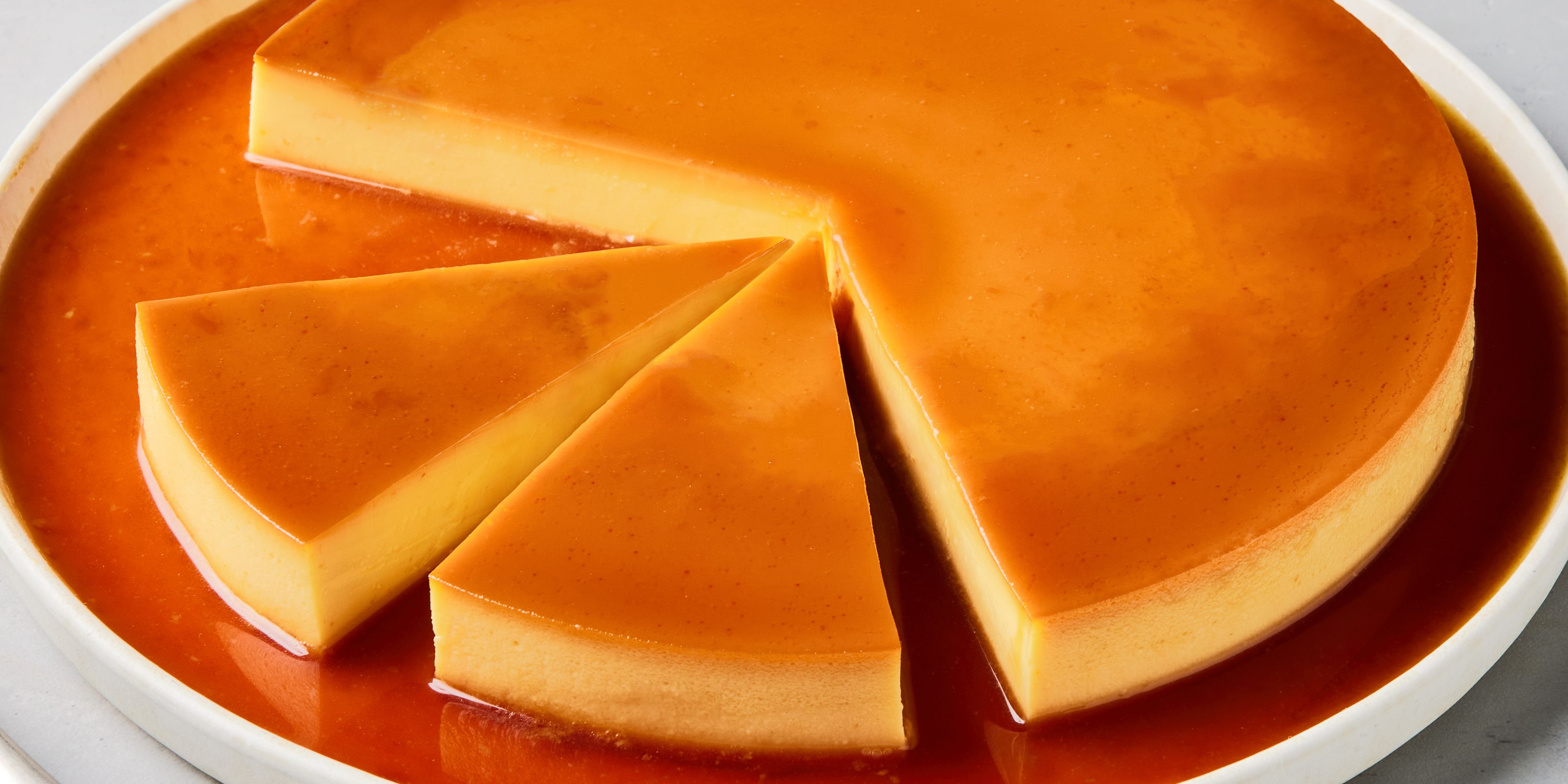
# Five Golden Rules of Flan With Chef Chris Valdes
Chef Chris Valdes breaks down the art of flan, the Spanish custard dessert that demands precision and patience. Flan's silky texture and caramelized sugar crown have made it a staple across Latin America and Spain, yet home cooks often struggle with cracking custards and burnt caramel.
Valdes emphasizes temperature control as rule one. The custard mixture requires gentle heating to prevent scrambling eggs, and baking demands a water bath that insulates the ramekins from direct oven heat. Too hot, and the flan splits. Too cool, and it refuses to set.
Ingredient quality ranks second. Valdes uses whole milk or a milk-and-cream blend rather than condensed milk for cleaner flavor. Vanilla extract matters, not imitation. Even the eggs demand attention. Room temperature eggs incorporate smoothly into the sugar and milk base, creating an emulsion that bakes evenly.
Caramel technique distinguishes amateurs from experts. Valdes cautions against burnt sugar, which tastes bitter. Dry caramel, made from sugar alone without added water, offers better control than wet caramel. Watch the sugar shift from pale amber to deep gold, then stop. Pour immediately into the ramekin bottom before it hardens.
Straining the custard mixture through fine mesh removes any cooked egg bits that might mar texture. This step takes seconds but prevents grittiness.
Finally, patience in chilling separates good flan from great flan. Valdes recommends overnight refrigeration before unmolding. The flan needs time to set fully and for flavors to meld. Rushing undermines all prior work.
Flan seems simple. Four ingredients. Three steps. But Valdes's rules reveal the technical