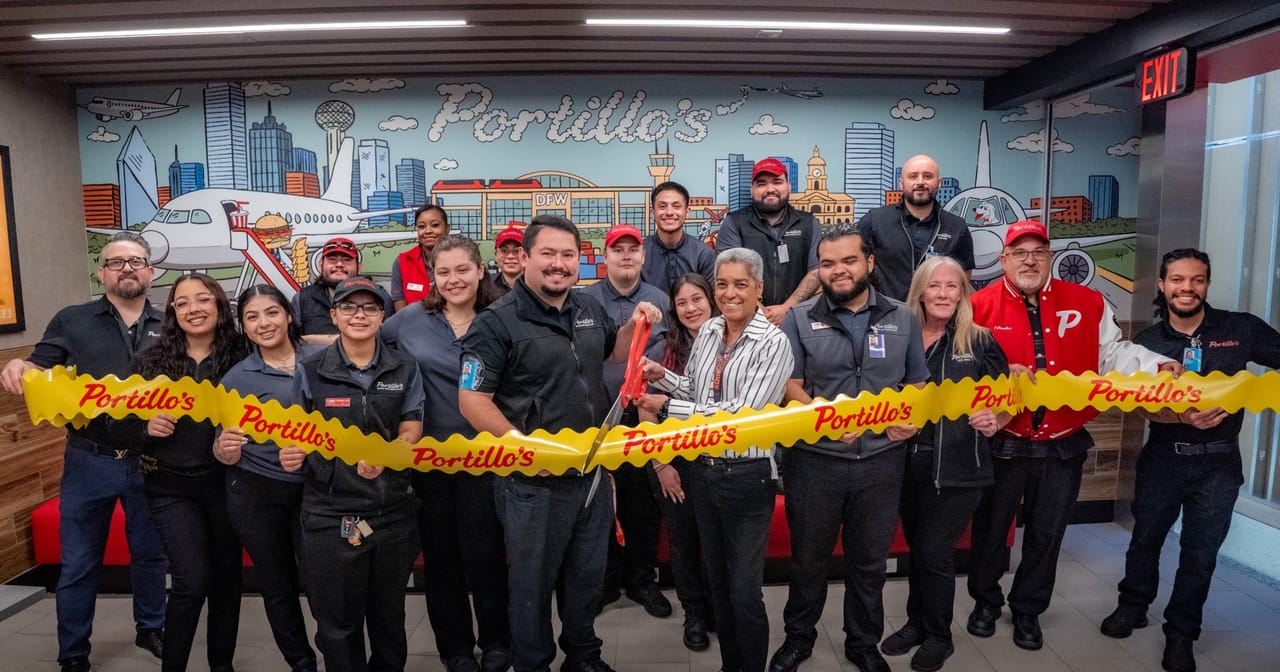
Portillo's has opened its first airport location at Dallas Fort Worth International Airport, marking a strategic expansion into travel retail that the fast-casual chain hopes will boost its Texas presence and showcase a compact operating model.
The Chicago-based restaurant group operates the new unit in a smaller footprint than its traditional locations, designed specifically for airport constraints and passenger traffic patterns. This format experiment tests whether Portillo's can maintain its operational efficiency and customer experience in a condensed space, a critical question for chains seeking airport expansion.
The move positions Portillo's to capture travelers headed to and from one of America's busiest airports while building brand recognition across Texas, a market where the chain continues expanding aggressively. DFW International serves over 70 million passengers annually, providing substantial exposure to potential future customers who encounter the brand in transit.
Airport locations traditionally operate with different economics than traditional restaurants. Lower labor availability, premium rent, and restricted hours require streamlined menus and simplified operations. Portillo's decision to operate in this space suggests confidence in its core menu's ability to translate to quick service formats, relying on signature items like Italian beef sandwiches, Chicago-style hot dogs, and cake shakes rather than full-service complexity.
The DFW location also addresses a fundamental business challenge for regional restaurant chains seeking national expansion. Airport units generate awareness among geographically diverse travelers, many of whom may later seek out full-service locations in their home markets. For Portillo's, which has aggressively expanded beyond Illinois into multiple states through traditional restaurants and a growing delivery presence, the airport model offers a low-risk testing ground.
Texas represents a critical growth market for Portillo's, with multiple traditional locations already operating across the state. An airport location serves as both a traffic driver and a brand ambassador, exposing millions of annual passengers to the chain's offerings without requiring the real estate investment of a traditional building