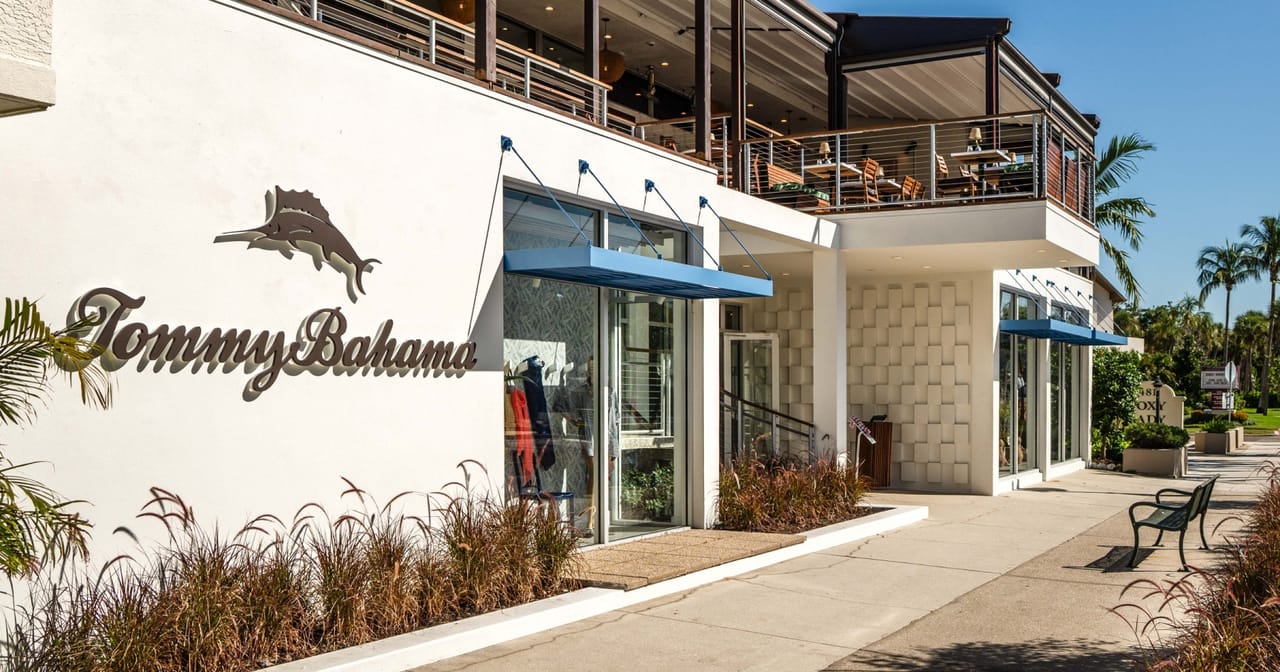
Tommy Bahama has built an unconventional business model that weaves retail and restaurants into a single destination experience. The clothing brand operates a chain of casual dining establishments housed within or adjacent to its retail locations, creating a hybrid space that capitalizes on customer dwell time and impulse spending.
This strategy differs sharply from typical restaurant or retail operations. Rather than compete as standalone venues, Tommy Bahama leverages the cross-pollination between shoppers and diners. A customer browsing Hawaiian shirts and resort wear can transition seamlessly into a meal without leaving the property. The restaurants typically feature coastal-inspired cuisine aligned with the brand's leisurely lifestyle aesthetic, with menus heavy on fresh seafood, tropical flavors, and rum-based cocktails.
The pairing generates multiple revenue streams from a single location. Retail customers linger longer when food and beverage are available on-site, increasing average transaction values. Diners become shoppers, browsing merchandise while waiting for tables or after finishing meals. Staff can cross-train between divisions, optimizing labor efficiency.
The model has proven resilient because it addresses evolving consumer preferences. People increasingly seek experiential destinations rather than purely transactional ones. A shopping trip combined with lunch becomes an outing, justifying travel and time investment in ways standalone retail or restaurants cannot.
Tommy Bahama's approach reflects broader retail trends. Department stores and shopping districts have struggled as e-commerce cannibalized sales. Retailers that survive integrate dining, entertainment, and community spaces. Tommy Bahama simply took this principle further by controlling both experiences under one brand umbrella.
The strategy also reinforces brand identity. Every touchpoint, from the shirt you buy to the cocktail you drink, reinforces the Tommy Bahama lifestyle narrative of relaxation, quality, and escapism. This consistency strengthens customer loyalty.
Competition in casual dining remains fierce, and retail transformation