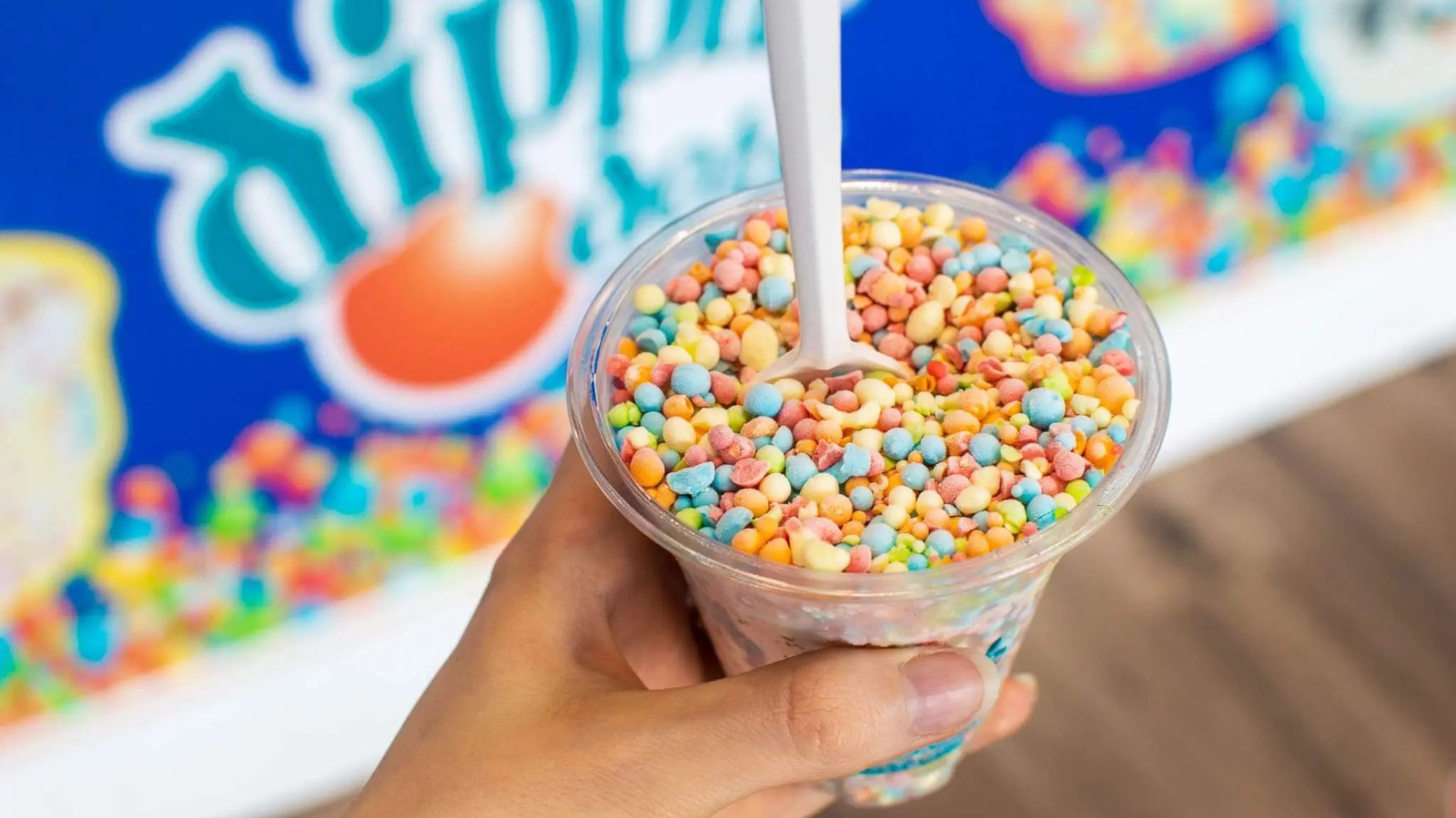
Dippin' Dots originated from an unexpected place: livestock feed research in the 1980s. Curt Jones, a microbiologist working at a Kentucky dairy, experimented with a cryogenic freezing technique designed to preserve nutrients in animal feed. The flash-freezing process he developed used liquid nitrogen to instantly solidify tiny spheres of flavored liquid, creating balls that stayed frozen and separate rather than clumping together.
Jones recognized the commercial potential beyond agriculture. He adapted his freezing method to create ice cream beads, which debuted in 1987. The concept captured public imagination instantly. The tiny spheres dissolved on the tongue in an entirely novel way, offering texture and novelty that traditional ice cream could not match.
The "ice cream of the future" branding proved effective. Dippin' Dots positioned itself as a technologically advanced dessert, and the mysterious cryogenic process added glamour to the product. The brand expanded rapidly through theme parks, arcades, and entertainment venues where novelty and spectacle drive sales. The beads maintained their frozen state longer than conventional ice cream, making them practical for outdoor venues where regular frozen desserts melted quickly.
What began as farm innovation transformed the frozen dessert market. The company built its identity on the science behind the product, not just the taste. This origin story illustrates how breakthrough technologies in one industry often find unexpected applications elsewhere.
Today, Dippin' Dots remains recognizable by its distinctive appearance and the sensory experience it delivers. The flash-frozen beads have become a cultural touchstone, particularly for younger consumers who grew up encountering them at amusement parks and carnivals. While competitors have attempted to replicate the concept, the original maintains its market position through brand recognition and the novelty that first captured consumer attention four decades ago.