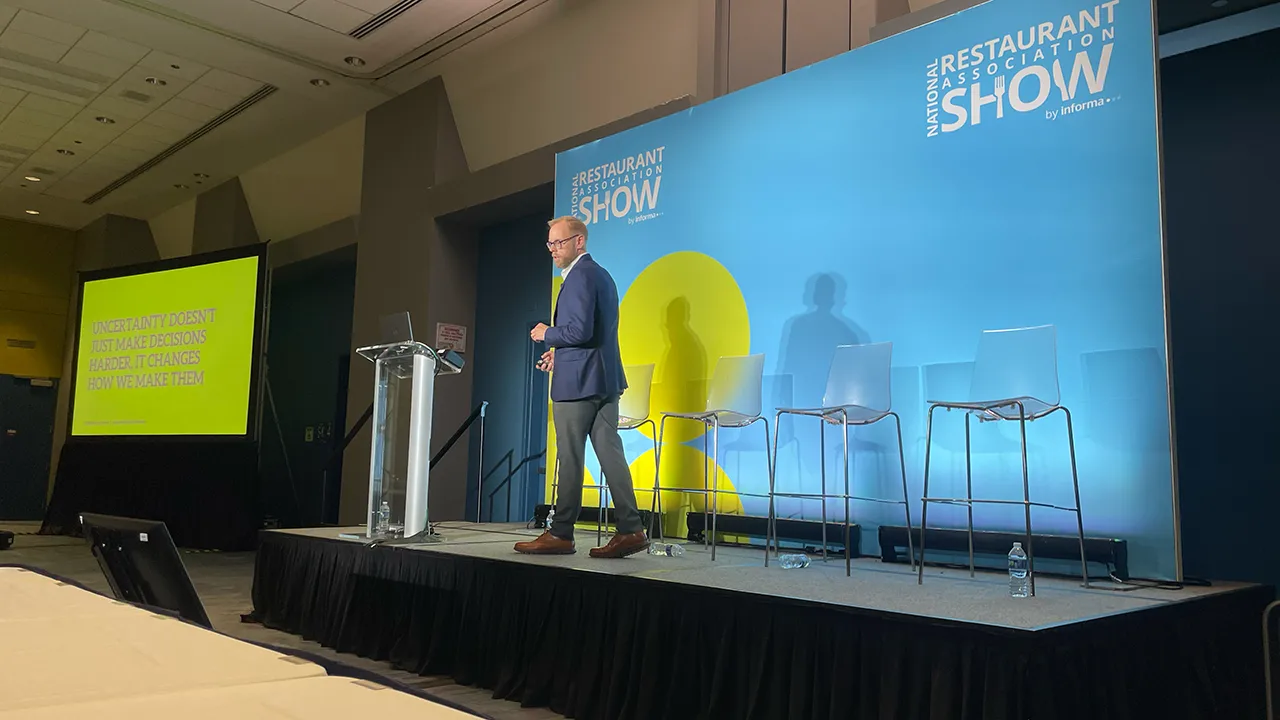
# Making Decisions When You Don't Have All the Answers
Theo Schweitz, a prominent figure in the restaurant industry, offered practical guidance on navigating uncertainty at the National Restaurant Association Show. His advice cuts through the paralysis that often grips operators facing volatile markets, supply chain disruptions, and shifting consumer behavior.
Schweitz emphasized the importance of acting with incomplete information rather than waiting for perfect data. Restaurant operators cannot afford to freeze when input costs spike unpredictably or demand patterns shift overnight. The key lies in setting decision frameworks beforehand, establishing clear thresholds that trigger action without endless deliberation.
He advocated for small, reversible decisions over grand commitments. A limited-time menu test costs less and reveals consumer appetite faster than permanent menu overhaul. A pilot ordering system in one location catches operational problems before rolling out across thirty units. This approach limits downside while gathering real-world intelligence.
Schweitz stressed the value of rapid feedback loops. Operators who talk directly to their staff, customers, and suppliers gain insights no spreadsheet delivers. A line cook notices ingredient quality shifts before it affects plating. A server hears what dishes excite diners. A supplier signals price pressure weeks before invoices spike. These conversations, repeated consistently, illuminate the path forward.
He also highlighted the cost of indecision itself. Delaying menu changes, postponing pricing adjustments, or waiting to adjust staffing levels often causes more damage than acting decisively and imperfectly. The restaurant business moves fast. Markets don't wait for certainty.
Schweitz's framework applies beyond individual operators. Investors, vendors, and corporate chains facing this turbulent period need the same discipline. Build scenarios. Make assumptions explicit. Test assumptions cheaply. Adjust quickly. The operators who survive and thrive won't be those with perfect foresight but those who make better decisions, faster