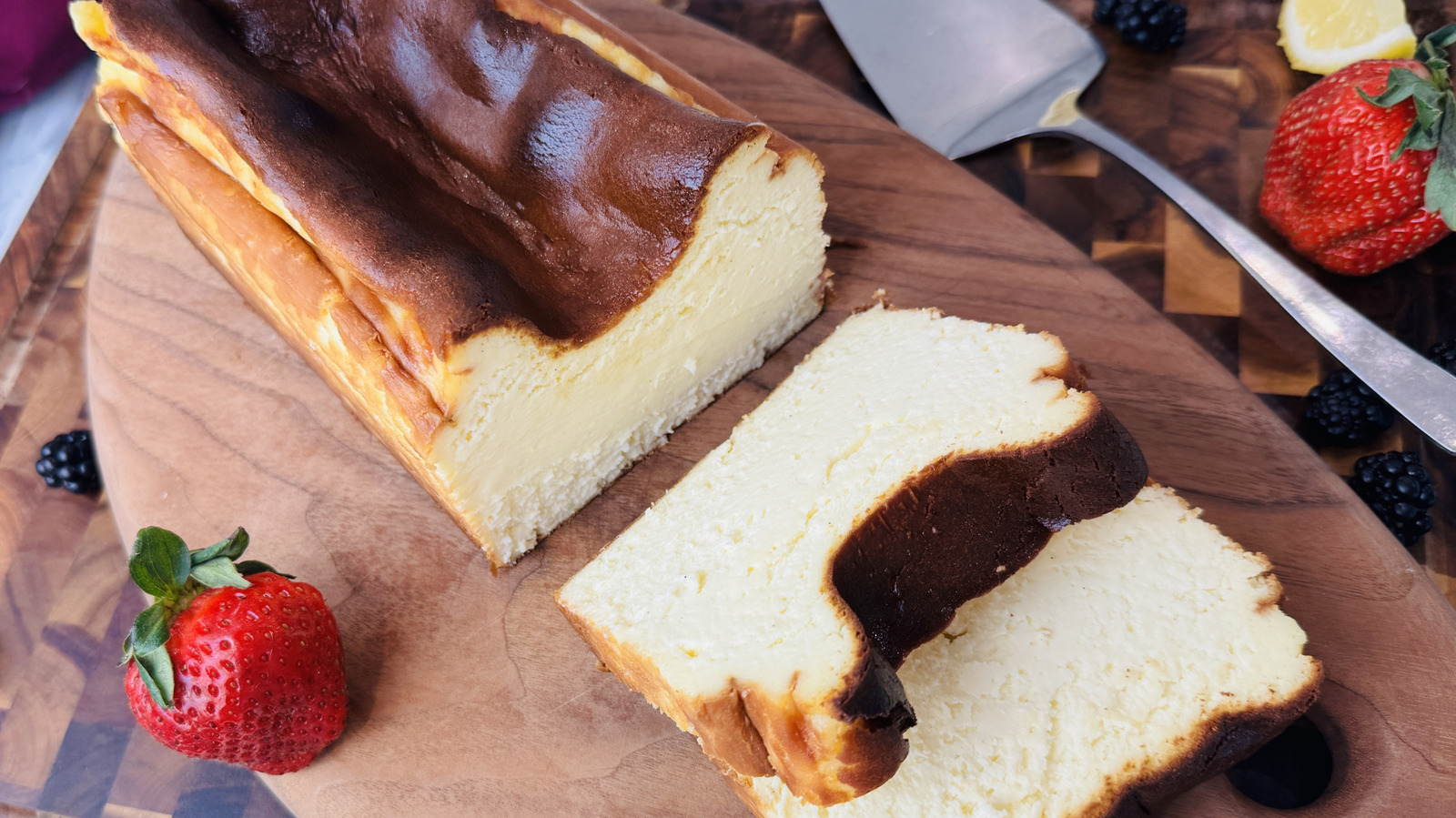
A new approach to Basque cheesecake sidesteps the equipment demands that intimidate home bakers. The loaf pan version eliminates the need for a water bath, the springform pan setup, and the careful temperature management that traditional Basque cheesecake demands. The result delivers the signature caramelized, blistered top and creamy interior that made this Basque Country dessert a global phenomenon.
Basque cheesecake emerged from San Sebastian's La Viña restaurant in the 1990s and became a viral sensation decades later when social media users discovered its rustic, almost burnt exterior and custardy center. The style appeals because it rejects cheesecake perfectionism. Rather than seeking an unblemished, pristine finish, bakers intentionally encourage deep caramelization.
The loaf pan adaptation preserves this philosophy while removing barriers to execution. Traditional recipes require precise oven temperatures, water baths to prevent cracking, and springform pans that many home kitchens lack. The loaf pan format works because it conducts heat differently, creating that crucial caramelized top through straightforward baking without supplementary equipment or water displacement techniques.
The recipe produces a dessert that looks deliberately imperfect. Cracks across the surface and darkened patches signal success, not failure. The creamy interior contrasts sharply with the firm, caramelized exterior. This textural interplay defines the Basque cheesecake experience.
Home bakers benefit from a simpler pathway to restaurant-quality results. The loaf pan method requires basic ingredients—cream cheese, sugar, eggs, and heavy cream—combined and baked without elaborate technique. The appeal extends beyond simplicity. Loaf pans also portion the dessert differently than round springform pans, creating distinct slices rather than wedges.