# Making Decisions When You Can't See the Future
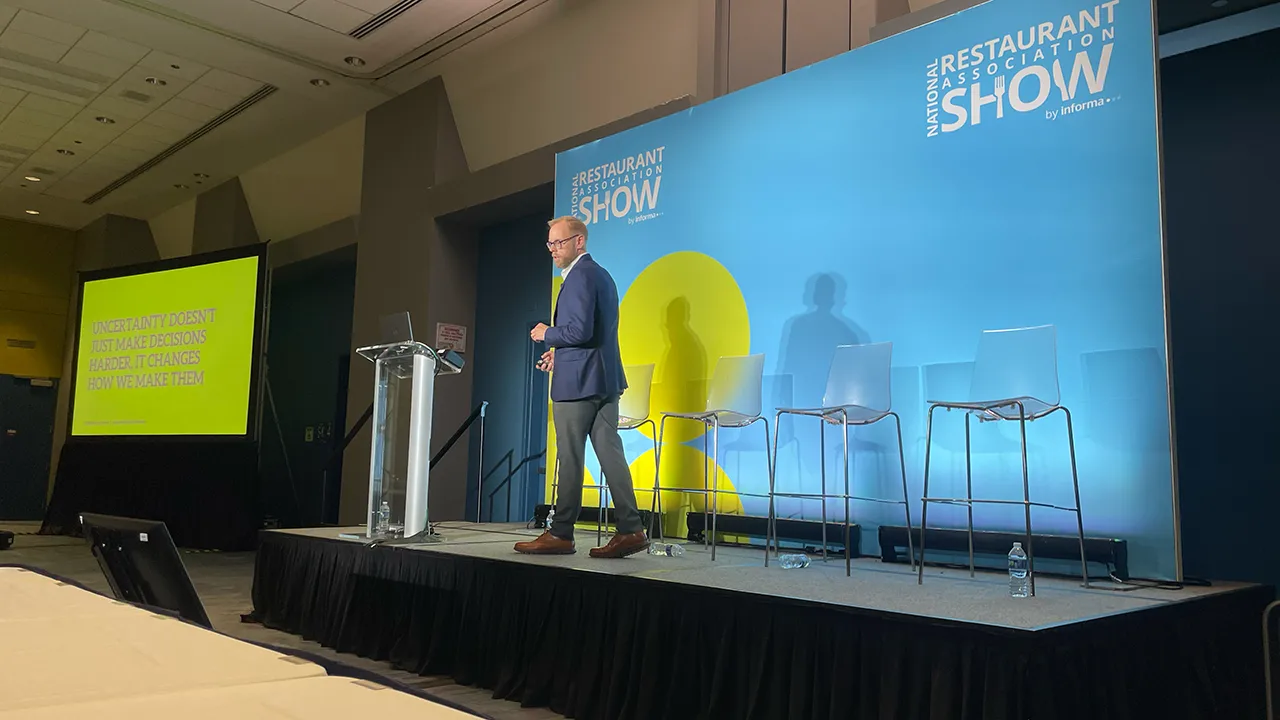
Theo Schweitz, a prominent restaurant industry figure, shared his framework for navigating uncertainty at the National Restaurant Association Show. His approach centers on actionable intelligence rather than perfect information.
Schweitz emphasized that operators face constant decisions without complete data. Menu pricing, staffing levels, inventory purchases, and expansion plans all demand choices made under uncertainty. Waiting for certainty paralyzes businesses.
His method involves gathering the best available information, setting clear decision criteria, and moving forward with conviction. For restaurant leaders, this means talking directly to guests, tracking sales patterns rigorously, and monitoring labor market shifts. Data collection happens fast, not perfectly.
Schweitz highlighted that reversible decisions deserve speed while irreversible ones warrant caution. Changing a dish costs less than signing a long-term lease. Testing a new concept on one location before rolling it out nationally reduces risk without requiring certainty.
The advice resonates across the industry as restaurants face compounding pressures. Labor costs fluctuate. Ingredient availability shifts. Consumer preferences evolve. Schweitz's framework acknowledges that operators cannot predict these variables with precision. They can, however, build systems that respond quickly when conditions change.
Restaurant owners who implement this approach tend to outperform peers who wait for perfect conditions. They adjust pricing when ingredient costs spike. They modify menus when suppliers cannot deliver. They scale staffing based on real traffic patterns rather than forecasts.
Schweitz's presentation addressed a fundamental challenge in restaurant management. The business demands constant decision-making. Operators who embrace uncertainty and move forward systematically outpace those paralyzed by incomplete information. Speed and flexibility matter more than perfect prediction.