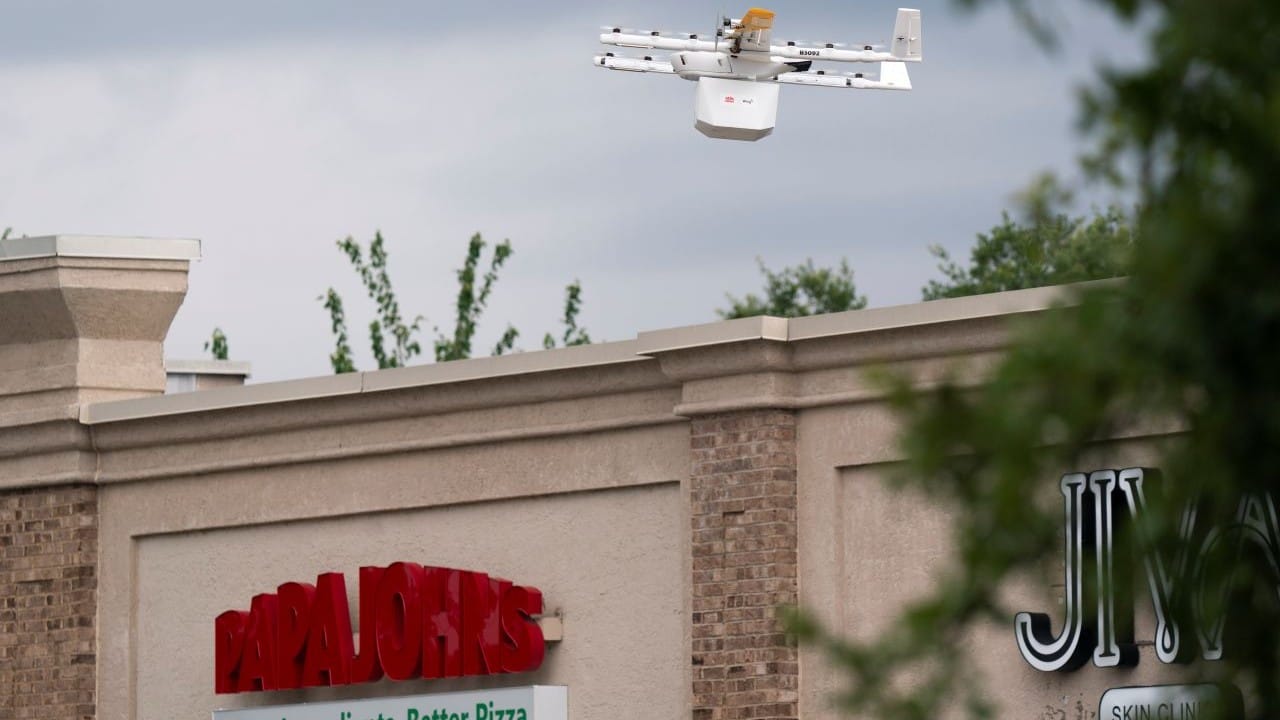
Papa John's joins the growing roster of restaurant chains experimenting with autonomous delivery. The pizza giant partnered with Alphabet's Wing, the company's drone delivery subsidiary, to test aerial pizza transport. This move builds on Papa John's existing relationship with Google Cloud, Alphabet's enterprise computing division.
The partnership positions Papa John's alongside other chains exploring drone logistics. Delivery drones promise faster service in select markets, though regulatory hurdles and weather constraints remain obstacles. Wing operates in limited jurisdictions across the United States, requiring Federal Aviation Administration approval for each expansion.
For Papa John's, drone delivery addresses a persistent challenge in the QSR sector. Last-mile delivery costs squeeze margins for chains relying on third-party platforms like DoorDash and Uber Eats. A drone fleet could bypass traffic congestion, reduce labor expenses, and theoretically cut delivery times to under fifteen minutes for nearby customers.
Wing's track record includes partnerships with Walmart, Lowes, and Chipotle. The company operates in several markets including North Carolina, Texas, and Arizona. Success hinges on consumer comfort with unmanned aircraft plus solving practical issues like weather reliability and secure food handling during flight.
Papa John's strategy reflects broader industry trends. Quick-service restaurants increasingly invest in technology to differentiate from competitors and recapture margins eroded by delivery fees. The chain also operates its own delivery fleet in some markets, giving it flexibility to test new models without abandoning existing infrastructure.
The drone experiment carries symbolic weight. Thirty years after pioneering online pizza ordering, Papa John's now pioneers robotic delivery. Whether drones become standard or remain niche depends on regulatory evolution and consumer adoption rates. For now, the partnership signals that pizza chains view autonomous delivery not as science fiction, but as operational reality worth testing today.