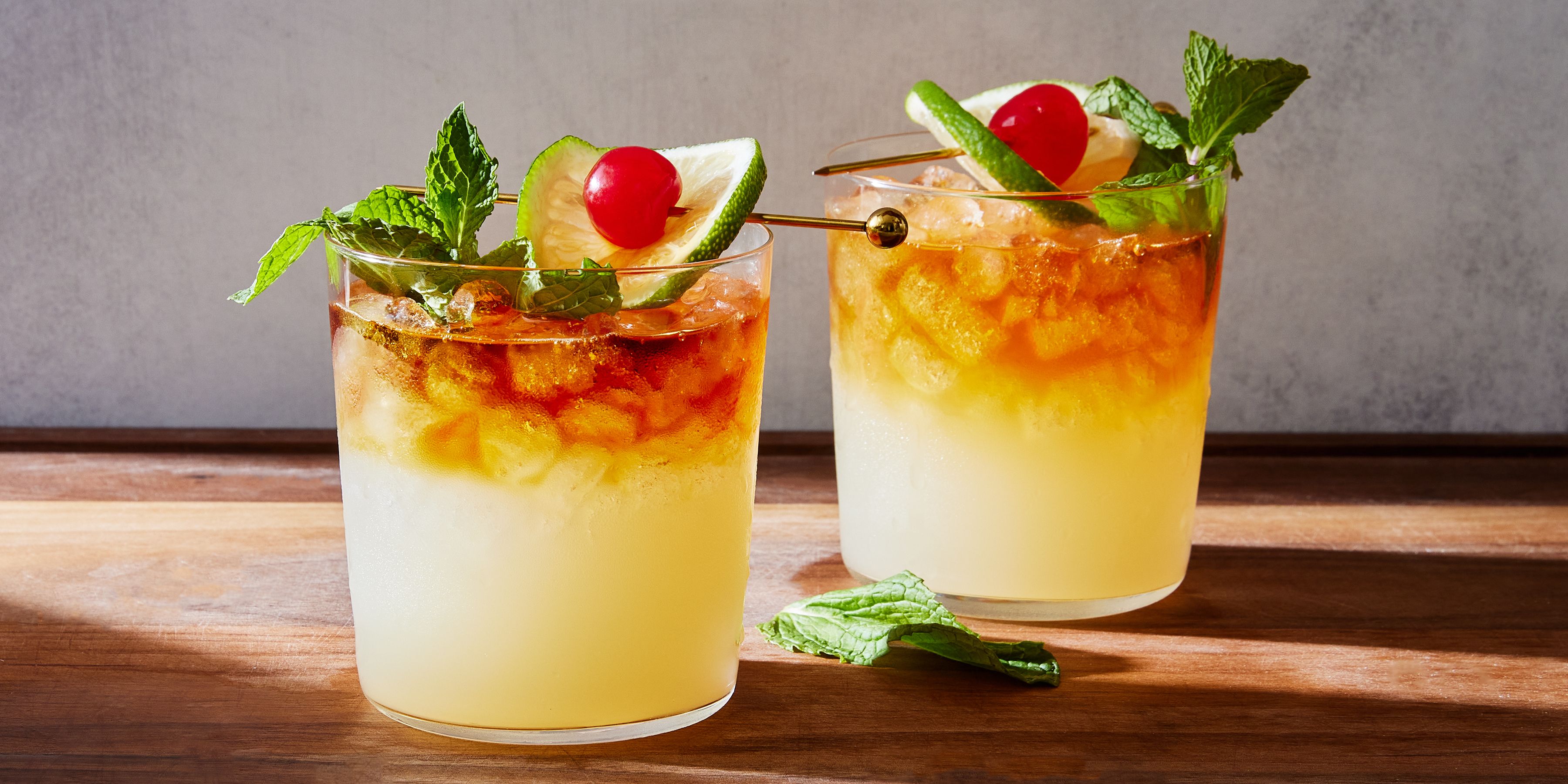
# The Mai Tai's Enduring Reign in Tropical Cocktail Culture
The Mai Tai stands as one of the most iconic tropical cocktails ever created, born in 1944 at Trader Vic's in Oakland, California, when Vic Bergeron invented the drink for two Tahitian friends. The recipe has remained largely consistent for nearly 80 years, built on a foundation of aged rum, lime juice, orgeat syrup, and dry curaçao.
The drink's simplicity masks its sophistication. Bergeron used a blend of rums, specifically a two-to-one ratio of Jamaican to Martinique varieties, to create complexity that single rums cannot achieve. The orgeat, a creamy almond-based syrup, provides sweetness and body, while fresh lime juice cuts through with acidity. Dry curaçao adds subtle citrus notes without excess sugar. The result tastes refreshing yet balanced, tropical yet refined.
Bartenders debate the "correct" Mai Tai endlessly. Some insist on Bergeron's original formula: Jamaican rum, Martinique rhum agricole, lime, orgeat, and a small float of absinthe rather than curaçao as the final touch. Modern interpretations vary, with some bars substituting Jamaican rums for overproof varieties or adjusting ratios to suit local palates.
The cocktail transcends tiki bars. Whether served at tropical resorts, high-end cocktail lounges, or beachside shacks, the Mai Tai signals escape and relaxation. Its dominance reflects broader trends in spirits consumption. Rum sales have climbed steadily as consumers seek alternatives to vodka and whiskey. Premium aged rums command premium prices. Craft bartenders have elevated tiki culture from kitschy 1