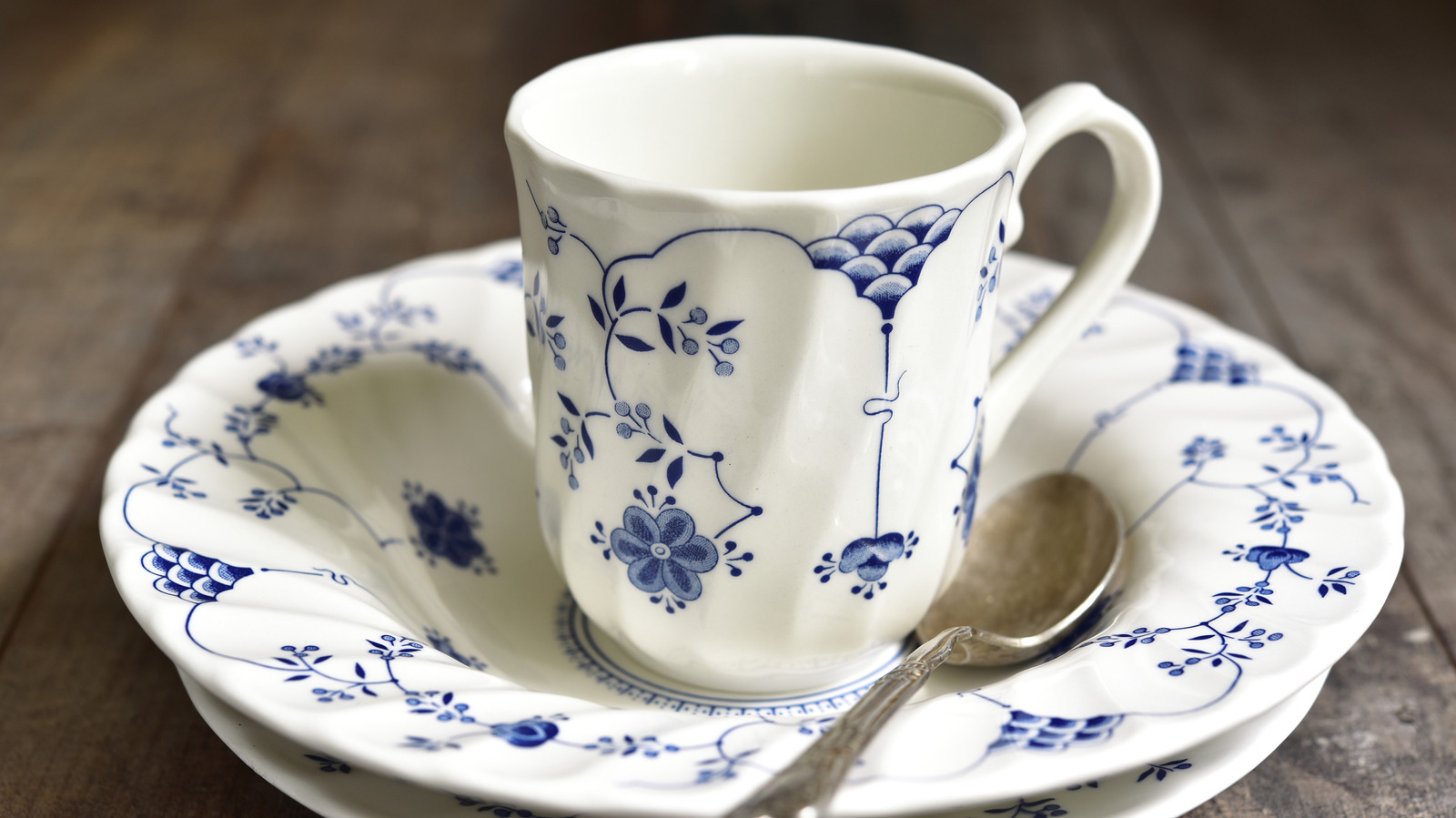
Royal Copenhagen, a Danish porcelain manufacturer founded in 1775 and still operating today, represents a rare collectible opportunity for thrift hunters of fine china. The brand is most famous for its blue and white patterned designs, particularly the Blue Fluted Plain pattern, one of the company's oldest.
To confirm authenticity, check for a backstamp on the underside. Pieces made between 1870 and 1923 feature three blue wavy lines, a blue crown, or both, usually stamped with "Denmark" or "Royal Copenhagen". Items from 1923 onward display a blue crown with "Royal" above and "Copenhagen" and "Denmark" below, along with a painter's signature. Earlier pieces from 1775 to 1869 show hand-painted blue waves rather than stamps.
The most collectible Royal Copenhagen patterns include Blue Fluted Lace, which appears on plates, bowls, teacups, and saucers with a delicate blue design on white china. Flora Danica, a botanical pattern over 235 years old, also commands collector interest and appears on dishware and vases. Discontinued patterns like Blue Flowers, produced from 1913 to 2002, and Blue Pheasant, available from 1989 to 2000, appeal to thrifters. Annual Christmas plates are highly sought as well.
A significant caution applies to vintage Royal Copenhagen china. Pieces may contain lead, particularly older Flora Danica items. While Royal Copenhagen confirmed that Flora Danica pieces made from 2021 onward no longer contain lead, older versions should be used for display only. Lead testing kits can confirm safety before purchase.