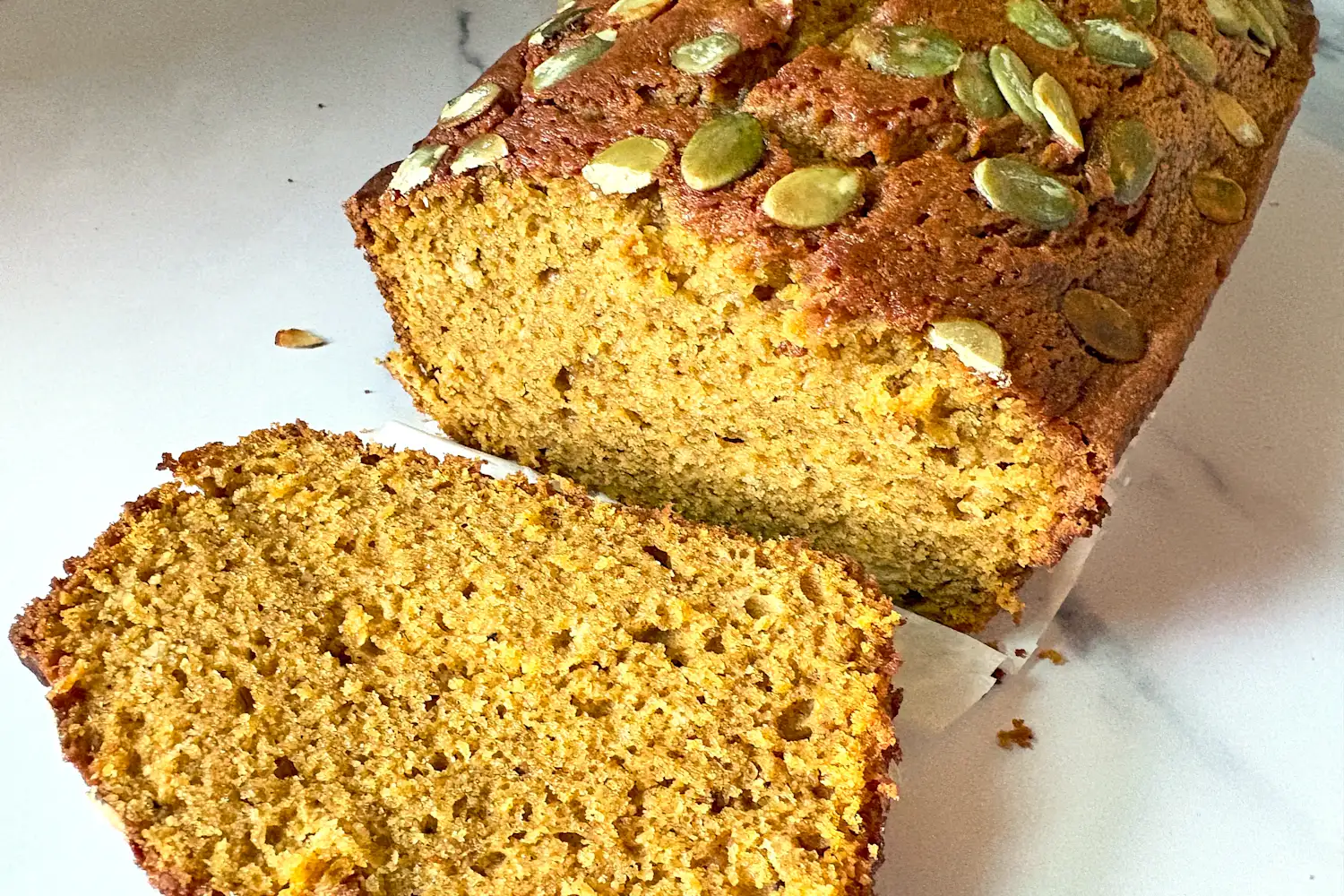
# The Enduring Appeal of Pumpkin Bread: Why This Fall Staple Never Goes Out of Style
Pumpkin bread occupies a unique position in American home baking. It sits somewhere between dessert and breakfast bread, acceptable at any hour, infinitely forgiving to novice bakers, and reliably delicious when made with canned pumpkin puree.
The appeal runs deeper than seasonal nostalgia. Pumpkin bread works because canned pumpkin puree delivers consistent moisture and subtle sweetness without requiring the effort of roasting fresh pumpkins. A can of puree contains about 80 percent water, which means the resulting loaf emerges from the oven remarkably tender. This moisture content proves far more forgiving than many quick breads. Over-mixing the batter, a common mistake in home baking, causes less structural damage when pumpkin puree hydrates the crumb so thoroughly.
The spice combination matters equally. Cinnamon, nutmeg, cloves, and ginger create a warm flavor profile that feels nostalgic without tasting one-dimensional. These spices bridge sweet and savory territory comfortably. A slice tastes equally at home served alongside morning coffee or packed into a lunchbox or enjoyed as an afternoon snack.
Home bakers gravitate toward pumpkin bread because it solves a real problem. Fall entertaining demands recipes that can be made days in advance, travel well, and satisfy crowds with minimal fuss. Pumpkin bread keeps for days wrapped at room temperature and actually improves as flavors meld. It slices cleanly and presents well plated or wrapped as a hostess gift. The recipe requires no special equipment or advanced technique.
The seasonal availability of canned pumpkin, concentrated in September through November, creates cyclical demand that manufacturers anticipate reliably. This predictability means home cooks find consistent product quality year-round, though most bakers do associate pumpkin bread primarily with autumn and early winter months.
Regional variations exist. Some bakers add streusel toppings or cream cheese swirls. Others incorporate nuts like walnuts or pecans for textural contrast. The basic formula remains stable enough to accept experimentation while maintaining its essential character. A home baker can confidently double a recipe, bake it in a larger format, or portion it into muffins without substantially altering baking time or technique.
What distinguishes pumpkin bread from trendier pumpkin applications involves its accessibility. Pumpkin spice lattes require coffee shop equipment. Creamy pumpkin pasta demands ingredient sourcing and technique. Pumpkin cream cheese muffins require individual muffin tins and more precise portioning. A pumpkin bread loaf demands only one mixing bowl, one loaf pan, and a standard oven. The recipe democratizes fall baking.
The cultural acceptance of pumpkin-forward foods has only intensified. What once felt like a polarizing flavor preference has normalized into mainstream expectation. Grocery store shelves dedicated to pumpkin products expand each September. This market expansion validates home bakers' enthusiasm without requiring apology or irony. Making pumpkin bread no longer feels basic. It feels seasonally appropriate.