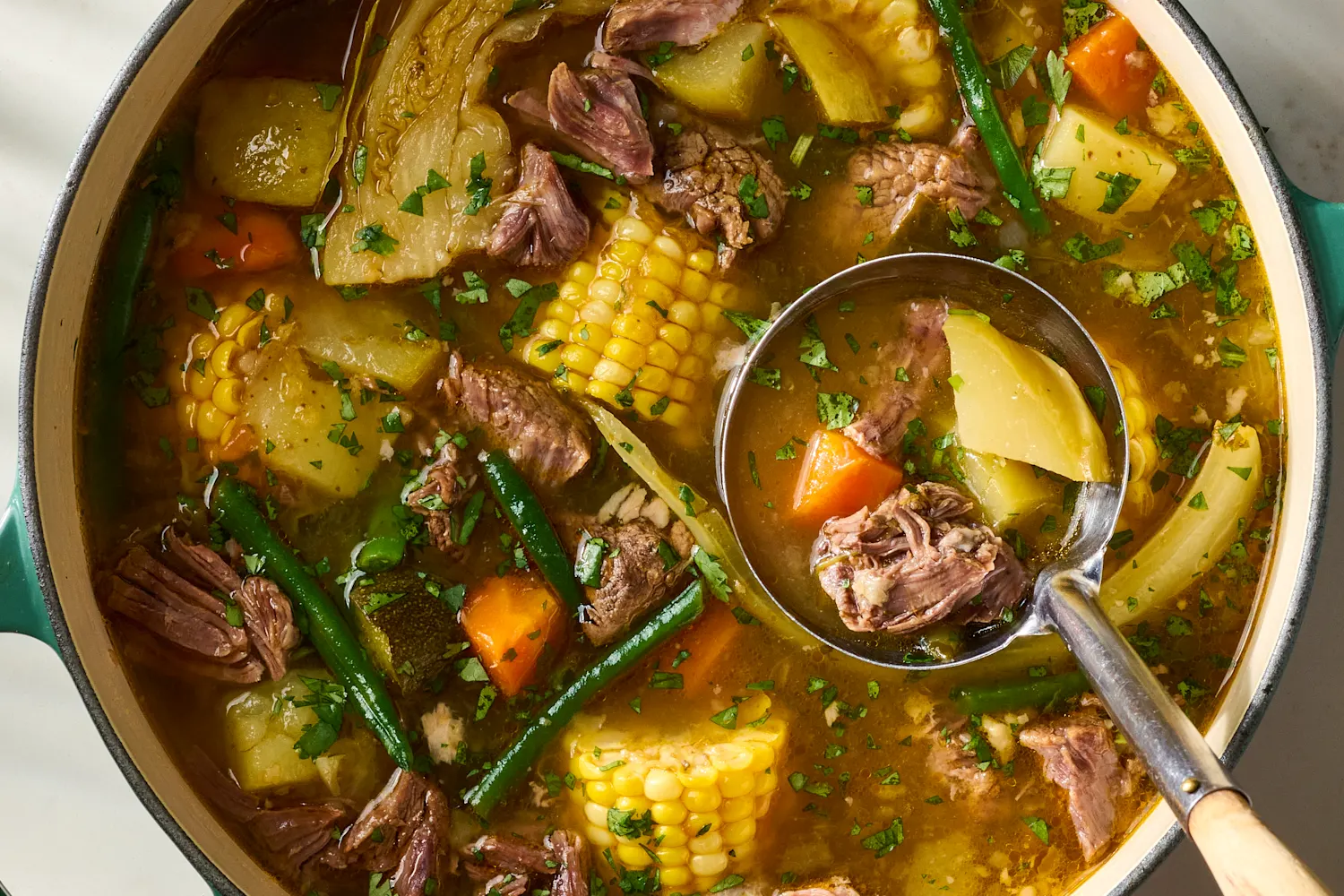
# Caldo de Res: The Mexican Beef Soup That Defines Home Cooking
Caldo de res sits at the heart of Mexican family tables, a humble yet profound dish that transforms beef shanks, vegetables, and patient simmering into pure comfort. This rustic beef soup carries generations of tradition in its broth, representing far more than just sustenance. It embodies the way families gather, the way mothers and grandmothers pass culinary knowledge down through practice rather than formal instruction.
The dish builds its character from accessible ingredients executed with intention. Beef shanks provide the foundation, their bones releasing collagen and marrow into the cooking liquid over hours to create a broth that tastes rich without pretense. The vegetables shift with regional preference and seasonal availability, typically including potatoes, carrots, zucchini, and cabbage. Onions and garlic build the flavor base. Dried chiles like guajillo or ancho often appear in the broth, adding depth and subtle heat. Fresh cilantro finishes the bowl just before serving.
What makes caldo de res resonate across Mexican households, from border regions to central states, lies in its flexibility and accessibility. The dish requires no special equipment or hard-to-source ingredients. Any home cook with a large pot, affordable beef, and a farmer's market visit can execute it properly. This democratic quality stands in contrast to restaurant cooking that demands precision and rare components. Caldo de res invites experimentation. A cook might add chayote squash one week and skip it the next. Some families include rice in their bowls. Others serve lime wedges, tostadas, and jalapeños on the side for diners to customize their portions.
The cooking process itself teaches patience. Beef shanks need two to three hours of gentle simmering before yielding their full potential. During this time, the kitchen fills with savory steam. The meat softens until it barely clings to bone. The broth transforms from cloudy to clear, then deepens in color. This cannot be rushed without consequence. The reward for this investment comes in a bowl that warms from throat to stomach, that satisfies hunger completely, that tastes like someone who knows you well decided to feed you.
Caldo de res appears most often on Sunday tables in Mexican households, marking a transition from the week's pace to gathered time. The dish signals abundance without ostentation. A single pot serves many. Ingredients cost little. The time invested belongs to care rather than pretension.
Beyond Mexico, this soup has traveled wherever Mexican immigration established communities. In the American Southwest, Texas in particular, caldo de res appears in home kitchens and casual restaurants where it maintains its character. The dish resists the impulse toward refinement that strips dishes of their soul. No chef has found reason to deconstruct it, to plate it on slate, to reduce portions for appearance. It remains stubbornly itself.
For home cooks seeking entry into Mexican cooking, caldo de res offers a perfect starting point. It forgives minor timing variations. It improves with a day of rest in the refrigerator as fat solidifies on top, capturing flavor. It freezes well, transforming a Sunday project into weeknight availability. Most importantly, it teaches the fundamental technique that underlies much of global cooking. The patient building of flavor through time, the respect for ingredient quality, the understanding that the best meals arrive without rush.