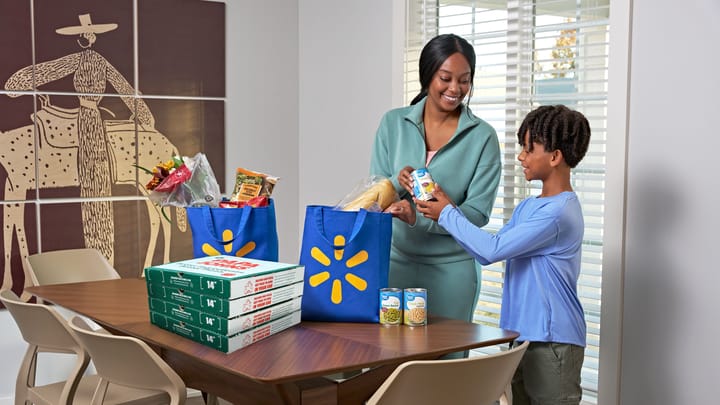
Walmart's delivery ambitions just expanded well beyond its parking lots. The retail giant now offers Papa Johns pizza through its marketplace delivery service, marking a turning point in how the company courts restaurant customers.
This move represents Walmart's first delivery partnership with a standalone restaurant chain operating outside its stores. Until now, Walmart's restaurant delivery focused on in-store concepts like Dunkin' and Subway, which operate as concessions within select Walmart locations. Papa Johns changes that calculus entirely. Customers can now order from independent Papa Johns locations and have pies delivered through Walmart's infrastructure.
The strategic logic here is straightforward. Walmart controls a massive delivery network already built for groceries and merchandise. By adding restaurant orders to that system, the company spreads its fixed costs across more transactions while capturing delivery fees and data on customer behavior. Papa Johns gains access to Walmart's 150 million monthly US customers and their delivery addresses, a massive marketing channel for the pizza chain.
This also signals Walmart's ambitions in the crowded food delivery space currently dominated by DoorDash, Uber Eats, and Grubhub. Those platforms have been profitable only recently after years of subsidizing delivery. Walmart enters from a different angle: it already owns the last-mile logistics. Adding restaurant orders means fuller delivery vehicles and better utilization of drivers who might otherwise carry only groceries.
Papa Johns makes strategic sense as the first external partner. The chain has roughly 3,200 US locations with established delivery operations. Its standardized menu travels well. Pizza itself moves quickly through delivery networks. A hot pie arrives at a customer's door in 30 minutes or less from most Papa Johns units, a timeframe Walmart's network can likely meet from nearby stores.
The partnership also reflects broader retail consolidation in food delivery. Kroger launched its own delivery platform. Target offers pickup for restaurant orders. Amazon has grocery delivery and Whole Foods integration. Every major retailer now views food delivery not as a separate business but as one more reason customers open their apps.
For Papa Johns, this partnership diversifies its delivery channels beyond its own app and DoorDash-style aggregators. Having direct access to Walmart's customer base reduces dependency on third-party platform fees, which can consume 15 to 30 percent of order value. That margin recovery matters for a chain operating on tight returns.
The question now is whether Walmart's experiment extends beyond Papa Johns. Other national chains like Domino's, Pizza Hut, and KFC could follow. Regional players might see opportunity too. If Walmart builds delivery volume with restaurants, the model becomes a revenue stream the retailer can scale without opening new stores.
This isn't Walmart trying to become a restaurant company. It's Walmart leveraging its core strength. logistics and customer access. Pizza happens to be the first category tested. Coffee and sandwiches already arrived through in-store partnerships. Full restaurant menus could follow. Walmart is simply adding restaurant delivery to the same infrastructure that delivers groceries, electronics, and household goods. That efficiency advantage is hard for traditional delivery platforms to match.