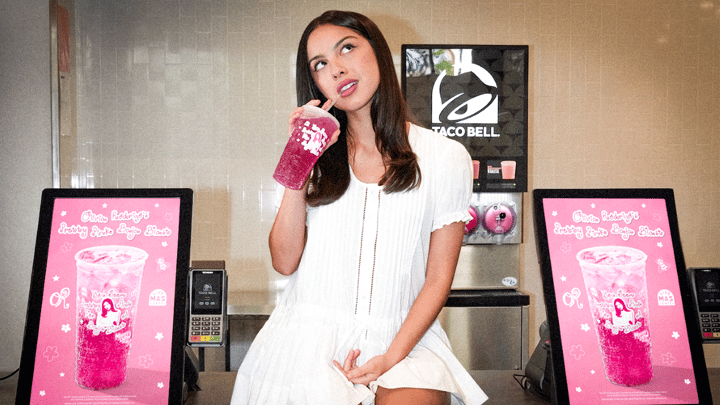
Taco Bell has tapped pop star Olivia Rodrigo to develop a limited-edition Baja Blast flavor, marking the fast-food chain's latest play in celebrity-driven product innovation. The new drink, called "You Seem Pretty Pink for a Baja Blast," draws visual inspiration from Rodrigo's recently released album "You Seem Pretty Sad for a Girl So In Love," which trades the signature neon green of the classic Baja Blast for a striking pink hue.
The collaboration positions Taco Bell squarely in the crosshairs of Gen Z consumers who follow Rodrigo's music and aesthetic closely. The 21-year-old Grammy-winning artist commands massive cultural influence among younger demographics, with a devoted fanbase that treats her album releases as cultural events. By embedding her visual language into a limited-edition beverage, Taco Bell borrows that cultural cachet while offering fans a tangible way to engage with Rodrigo's world.
This strategy reflects broader trends in QSR marketing. Fast-food chains increasingly partner with musicians and celebrities to create exclusive menu items that drive traffic beyond traditional food marketing. The approach works because it converts fandoms into foot traffic. Consumers who might not otherwise visit Taco Bell find reason to do so when their favorite artist's name appears on the product.
Baja Blast itself has become a cornerstone of Taco Bell's beverage strategy since its debut. The tropical lime flavor, exclusive to Taco Bell locations, has spawned countless limited variations and collaborations. These iterations keep the brand fresh without overhauling the core product. Past versions have experimented with different flavor profiles, while this pink edition represents a more radical visual departure.
The timing aligns with Rodrigo's album release cycle, creating a dual marketing moment. Fans discussing the new music record album artwork will simultaneously encounter Taco Bell's promotional pushes. The beverage becomes merchandise of sorts, a physical memento of fandom that costs far less than a concert ticket or album bundle.
For Taco Bell, the collaboration extends beyond a single product launch. Celebrity partnerships generate social media buzz, generate TikTok content from influencers and casual users alike, and create shareable moments that traditional advertising cannot replicate. The pink Baja Blast aesthetic practically begs for Instagram posts and unboxing-style content.
The limited-edition model also creates scarcity psychology. When customers know the product exists only temporarily, urgency drives purchase decisions. Taco Bell builds anticipation before launches and capitalizes on FOMO (fear of missing out) during the availability window.
This collaboration demonstrates how modern QSR marketing operates at the intersection of music, visual culture, and consumer psychology. Taco Bell recognized that Rodrigo's audience overlaps with its customer base and that her album aesthetics offered a natural extension into their beverage lineup. The result is a product that functions simultaneously as food, fandom expression, and cultural artifact.
The partnership also sets expectations for future collaborations. As celebrity tie-ins become standard practice across fast food, chains compete not just on food quality but on their ability to secure culturally relevant partnerships. Olivia Rodrigo's involvement with Taco Bell signals the continued blurring of entertainment and food service industries, where a beverage becomes inseparable from the artist's brand identity.