# Fast Casual's Push Meets Quick-Service Giants in Shifting Market
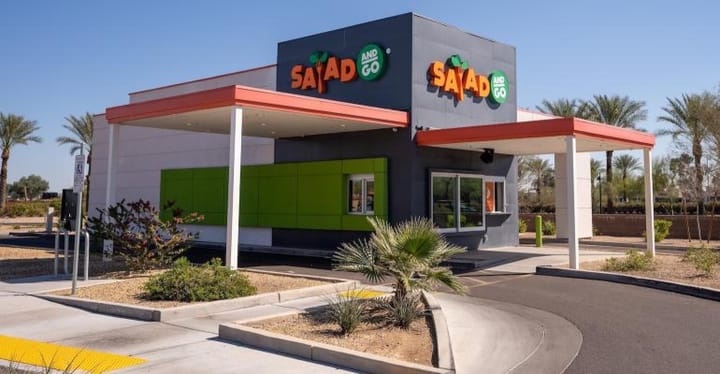
Salad and Go continues expanding its footprint as the fast-casual salad chain competes directly with traditional quick-service operators like McDonald's. The podcast covers how these brands navigate a market where consumers increasingly demand fresher, customizable options alongside speed and convenience.
Dine Brands, which franchises Applebee's and IHOP, faces pressure to adapt its casual dining model in an era when health-conscious diners gravitate toward lighter fare. The company's strategy balances preserving its established brand identity while incorporating menu innovations that appeal to evolving tastes.
The tension reveals a fundamental shift in restaurant hierarchy. Salad and Go's growth demonstrates that fast-casual concepts built on fresh ingredients and transparency now compete for the same customer wallet as McDonald's. The Golden Arches has responded by testing salads and plant-based options, though executing fresh food at McDonald's scale remains complex.
McDonald's operates over 13,000 U.S. locations with supply chains optimized for consistency and cost control. Salad and Go, with significantly fewer restaurants, leverages speed and ingredient freshness as differentiators. This creates distinct operational challenges. McDonald's must maintain profit margins on fresh produce that spoils quickly. Salad and Go must scale without compromising the freshness promise that drives its appeal.
Dine Brands occupies middle ground. Applebee's and IHOP depend on casual dining's traditional draw: full-service dining and broader menus. Yet casual dining traffic has declined steadily, pushing Dine Brands to modernize. Recent menu additions and digital ordering reflect the company's attempt to capture price-conscious diners without abandoning the segment's fundamentals.
The podcast underscores how consumer preferences reshape restaurant competition. Twenty years ago, the categories remained largely