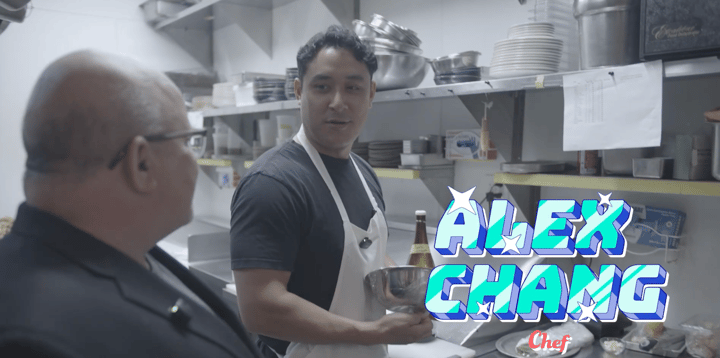
Alex Chang, chef and owner of Kiko in New York City, walks diners through the precision required to build a Dungeness crab handroll that balances texture, temperature, and taste in every bite.
Chang's approach treats the handroll as architecture. He layers sweet Dungeness crab meat with crispy nori, adding brightness through citrus elements and heat from carefully placed condiments. Each component serves a purpose. The nori provides structural support and umami depth. The crab contributes natural sweetness and delicate protein. The rice acts as a neutral base that absorbs flavors without overwhelming them.
His technique relies on specific tools and timing. Chang uses a sharp knife to cleanly cut the nori, preventing tears that would compromise the roll's integrity. He keeps ingredients at different temperatures—cold crab against warm rice creates textural contrast that activates the palate. The handroll format itself matters. Unlike maki rolls made with a mat, handrails allow diners to experience the nori's crackling texture before it softens.
Chang emphasizes the importance of quality sourcing. Dungeness crab season determines when this dish appears on Kiko's menu, forcing him to work with the ingredient at its peak rather than forcing availability year-round. This seasonal discipline shapes his broader cooking philosophy.
The dynamic flavor combinations emerge from restraint. Chang avoids overcrowding the handroll, understanding that three or four precisely chosen elements beat eight mediocre ones. He pairs the crab with complementary acids and oils that heighten rather than mask its natural brininess.
This handroll represents the technical foundation behind Kiko's modern Japanese approach. The demonstration reveals how Chang thinks about his craft. Fine dining demands this level of detail, from ingredient selection through plating. For home cooks watching, the lesson extends beyond sushi. Building dishes with intention, respecting