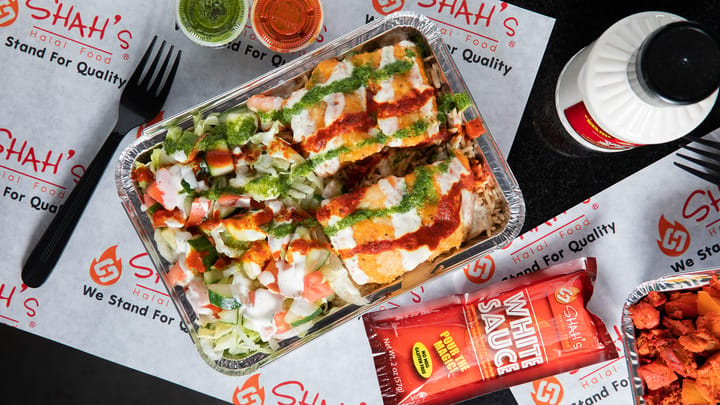
Khalid Mashriqi built Shah's Halal from a single New York food cart into a 200-location global powerhouse by betting on Afghan cuisine and religious dietary compliance when few competitors offered both.
The chain now operates 130 brick-and-mortar restaurants across the United States and 70 additional locations worldwide, each serving meat-forward Afghan dishes prepared under strict halal standards. Mashriqi recognized an underserved market: Muslim diners and others seeking certified halal protein in casual dining formats dominated by non-halal chains and regional cuisines.
Shah's Halal menu centers on kebabs, rice platters, and wraps built around lamb, chicken, and beef. The company sources halal-certified proteins exclusively, giving it competitive advantage in Muslim-majority neighborhoods and increasingly diverse urban markets where halal certification carries both religious and quality assurance weight. This commitment sets the chain apart from competitors offering halal-adjacent menu items without full supply chain verification.
The scaling strategy prioritized franchise partnerships over corporate ownership, allowing rapid geographic expansion without overextending central operations. Early success in New York's densely populated neighborhoods provided both proof of concept and word-of-mouth marketing that extended into suburban and secondary markets.
Food cart beginnings remain central to Shah's identity. Mashriqi maintained that origin story as the brand expanded, positioning street food authenticity against larger competitors. Consumers increasingly value restaurants with transparent heritage narratives, and Shah's cart-to-chain trajectory delivers exactly that.
The company's global footprint signals shifting appetites in international markets. European and Middle Eastern locations capitalize on existing demand for Afghan cuisine among diaspora communities while introducing the brand to new regions. This geographic diversification reduces reliance on U.S. market saturation.
Mashriqi's focus on halal certification at scale solved a supply problem. Halal meat distribution remains fragmented