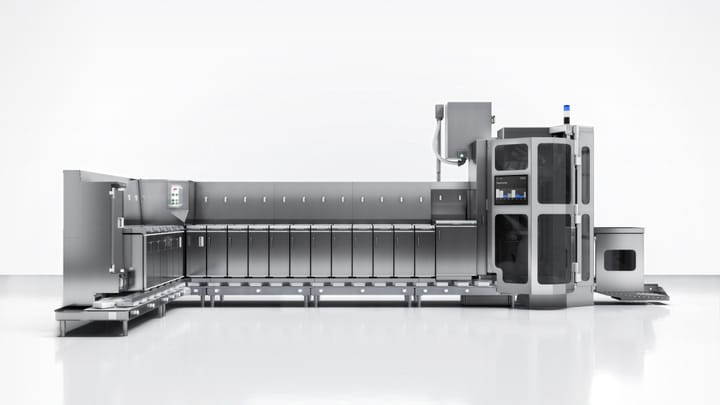
Travis Kalanick's Atoms, the automation-focused restaurant venture backed by former Uber investors, has raised $1.7 billion in a Series B funding round. Andreessen Horowitz led the investment, with Uber joining as a participant, marking renewed support from Kalanick's previous company.
Atoms operates CloudKitchens, a network of ghost restaurants and automated cooking facilities designed to streamline food preparation and reduce labor costs. The company uses proprietary technology and robotics to handle repetitive kitchen tasks, allowing operators to run multiple restaurant concepts from single locations with minimal staff.
The funding infusion signals accelerating investor appetite for automation across the restaurant sector. Labor shortages and rising wage pressures have made operational efficiency increasingly attractive to both established chains and new entrants. Atoms positions itself as a solution to these headwinds, offering standardized menus and tech-enabled workflows that reduce dependency on skilled kitchen labor.
Kalanick has leveraged his Uber reputation and network to build Atoms into a meaningful player in the cloud kitchen space. The company competes directly with traditional delivery-only kitchen operators but differentiates through automation and technology integration. The presence of Uber's capital signals confidence that ghost kitchens represent a durable business model, not just pandemic-era opportunism.
The $1.7 billion valuation reflects investor conviction in the broader automation thesis within foodservice. Atoms uses this capital to expand its footprint, develop new cooking robots, and refine software that manages everything from inventory to menu optimization. The company operates hundreds of locations globally, each capable of producing multiple restaurant brands simultaneously.
This funding round arrives as the restaurant industry grapples with persistent labor challenges and rising operational costs. While full-service and casual dining continue struggling with staffing, ghost kitchens and automated operations offer an alternative model. Atoms and competitors like Rebel Foods demonstrate