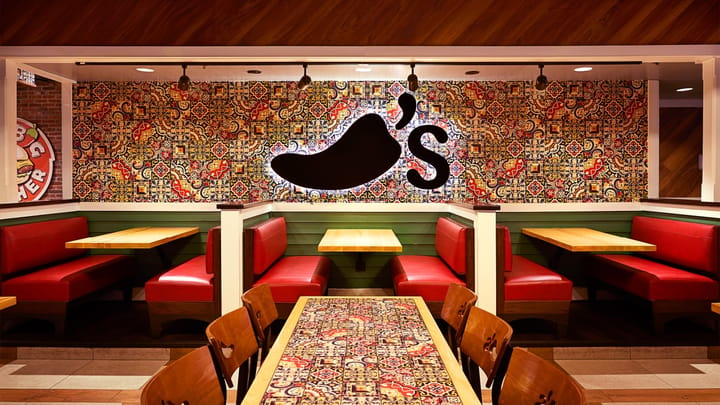
Brinker International has given its Chili's Bar and Grill chain a nostalgic redesign that pulls from the brand's archival playbook while introducing contemporary elements. The refresh emphasizes red booths and decorative tile, hallmarks of Chili's 1980s and 1990s identity, paired with expanded bar spaces and modern fixtures.
The redesign represents a calculated bet on comfort and familiarity at a moment when casual dining chains face sustained pressure from both fast-casual competitors and changing consumer habits. By reviving design cues from Chili's golden era, Brinker aims to trigger emotional connections with longtime customers while signaling relevance to younger diners drawn to retro aesthetics.
The expanded bar footprint reflects broader industry trends. Casual dining operators increasingly rely on bar revenues and cocktail sales to offset declining food check averages. A larger bar with improved sightlines encourages customers to linger, order drinks, and spend more per visit. The design change positions Chili's to capture more of the happy hour and late-night spending demographic.
The tile work and booth styling echo the Southwestern influence that originally defined Chili's when the chain launched in the 1970s. That aesthetic distinction had faded as locations received incremental updates over decades. This refresh attempts to restore visual coherence and create Instagram-worthy spaces. The combination of vintage references with modern lighting and materials appeals to design-conscious diners who value authenticity without sacrificing comfort.
Casual dining chains including Applebee's and Buffalo Wild Wings have similarly leaned into design refreshes to drive traffic and improve unit economics. Brinker's move suggests the company believes environmental investment pays dividends alongside menu innovation and pricing strategy.
The redesign rolls out across select Chili's locations, with broader implementation expected to continue through the coming year. Success metrics will