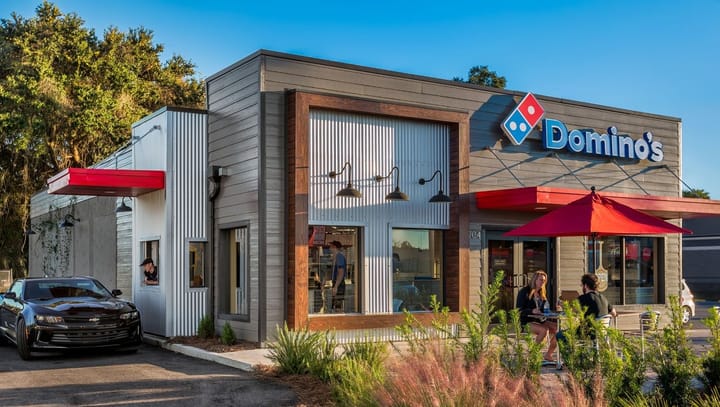
Domino's posted modest U.S. same-store sales growth of 0.1% in the second quarter, a performance that masked stronger underlying momentum in order volume. The pizza chain's results reflect the competitive pressures facing quick-service restaurants as consumers tighten spending and traffic remains soft across the sector.
The company's order count expansion signals growing customer engagement despite the sluggish sales climate. Domino's has leaned heavily on digital ordering and delivery infrastructure to drive frequency, advantages that have become table stakes in pizza delivery. The chain's substantial lead in app-based ordering and its partnership with third-party platforms continue to support transaction volumes even when average check sizes flatten.
Domino's U.S. footprint of over 6,600 locations generates roughly two-thirds of the company's total revenue, making domestic performance critical to shareholder expectations. The 0.1% same-store sales growth trails industry benchmarks for the period, though the order count gain suggests the chain is winning share in a fragmented market where regional players and local pizzerias compete intensely.
Price increases implemented across Domino's menu have offset some traffic declines but appear to have hit a ceiling with consumers. The company faces a balancing act between maintaining margins and driving volume in an environment where inflation-weary customers scrutinize value. Pizza delivery remains a resilient category, but the low single-digit growth reflects market saturation in many regions and delivery app competition that commodifies the product.
Domino's continued investment in technology, store remodels, and menu innovation positions it to capture order growth beyond traditional same-store sales metrics. The company's franchise model also insulates corporate revenue from unit-level sales volatility, allowing Domino's to benefit from order volume expansion regardless of pricing pressure at individual locations.