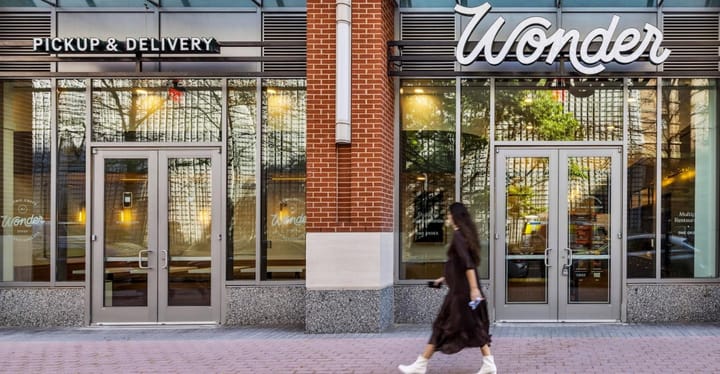
Wonder, the food hall and delivery startup, is pursuing a $600 million pre-IPO funding round that would push its total capital raised to nearly $2.8 billion. The move signals the company's acceleration toward a public market debut as it expands its footprint across multiple cities.
Wonder operates a hybrid model combining ghost kitchens with physical food halls where customers can order from multiple restaurant concepts in a single location. The company operates under brands including Zuul, its delivery platform, and runs dozens of food hall locations across major metropolitan areas. This funding round reflects investor appetite for the company's expansion strategy, which relies on densely populated urban markets where delivery demand remains strong.
The scale of capital required underscores the operational complexity of Wonder's model. Ghost kitchens demand significant real estate investment, staffing, and supply chain coordination. Food halls require even more infrastructure, including dining spaces, equipment, and multiple kitchen operations under one roof. These capital-intensive operations have historically challenged restaurant tech startups seeking profitability.
Wonder's path to IPO comes as the broader delivery and ghost kitchen sector matures after explosive pandemic-era growth. Companies like DoorDash and Uber Eats have consolidated market share, intensifying competition for upstarts. Wonder distinguishes itself through vertical integration, controlling both supply and distribution rather than relying solely on third-party restaurant partners.
The company faces headwinds typical of restaurant technology ventures. Labor costs continue rising. Consumer spending on delivery has plateaued in mature markets. Unit economics remain under scrutiny as investors demand paths to profitability before public debuts. Wonder must demonstrate that its integrated model generates returns superior to traditional restaurant operations or pure-play delivery platforms.
A successful IPO would validate Wonder's thesis that food halls represent the future of urban dining. The company's ability to raise $600 million at this stage suggests institutional investors believe in the model's