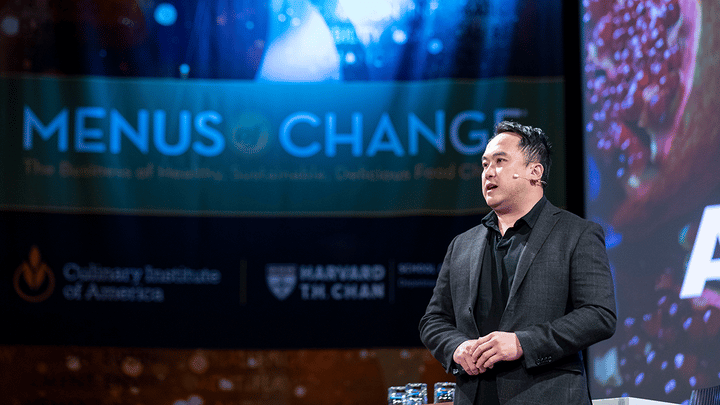
Futurist Mike Lee sketches a portrait of restaurants in 2035 shaped by three forces: automation, sustainability demands, and shifting consumer expectations.
Lee predicts kitchens will operate with fewer front-line cooks as prep work and plating move toward robotics and AI-assisted systems. Labor shortages that plague the industry today won't vanish. Instead, restaurants will redistribute tasks. Chefs will focus on menu innovation and quality control rather than repetitive station work. Technology handles consistency; humans handle creativity.
The sustainability pressure intensifies dramatically. Diners won't tolerate opaque supply chains. Restaurants that can't trace ingredients or justify waste face customer defection and regulatory penalties. Single-use packaging disappears. Water usage becomes as monitored as labor costs. Lee expects restaurants to shrink portion sizes while raising prices, reframing meals around quality rather than quantity.
Consumer behavior fractures further. Ghost kitchens proliferate for delivery-only models. Dine-in experiences bifurcate into two extremes: ultra-casual rapid-service joints and fine dining establishments offering theater and exclusivity. The middle collapses. Casual chains struggle to compete against both ends.
Transparency dominates. QR codes and blockchain tracking let customers see exactly where their salmon came from, how it was raised, and its carbon footprint before ordering. Lee notes this demands restaurants reshape vendor relationships and supply chains entirely.
Personalization reaches new sophistication through data. Restaurants track preferences, allergies, and dietary patterns. AI recommends dishes tailored to individual taste profiles and nutritional goals. Privacy concerns mount accordingly.
Remote work and hybrid schedules fragment traditional dining patterns. Lunch crowds thin. Weekend brunches intensify. Happy hour becomes a niche concept as commuting disappears.
Lee warns that restaurants failing to adopt these shifts won't survive. Success requires rethinking