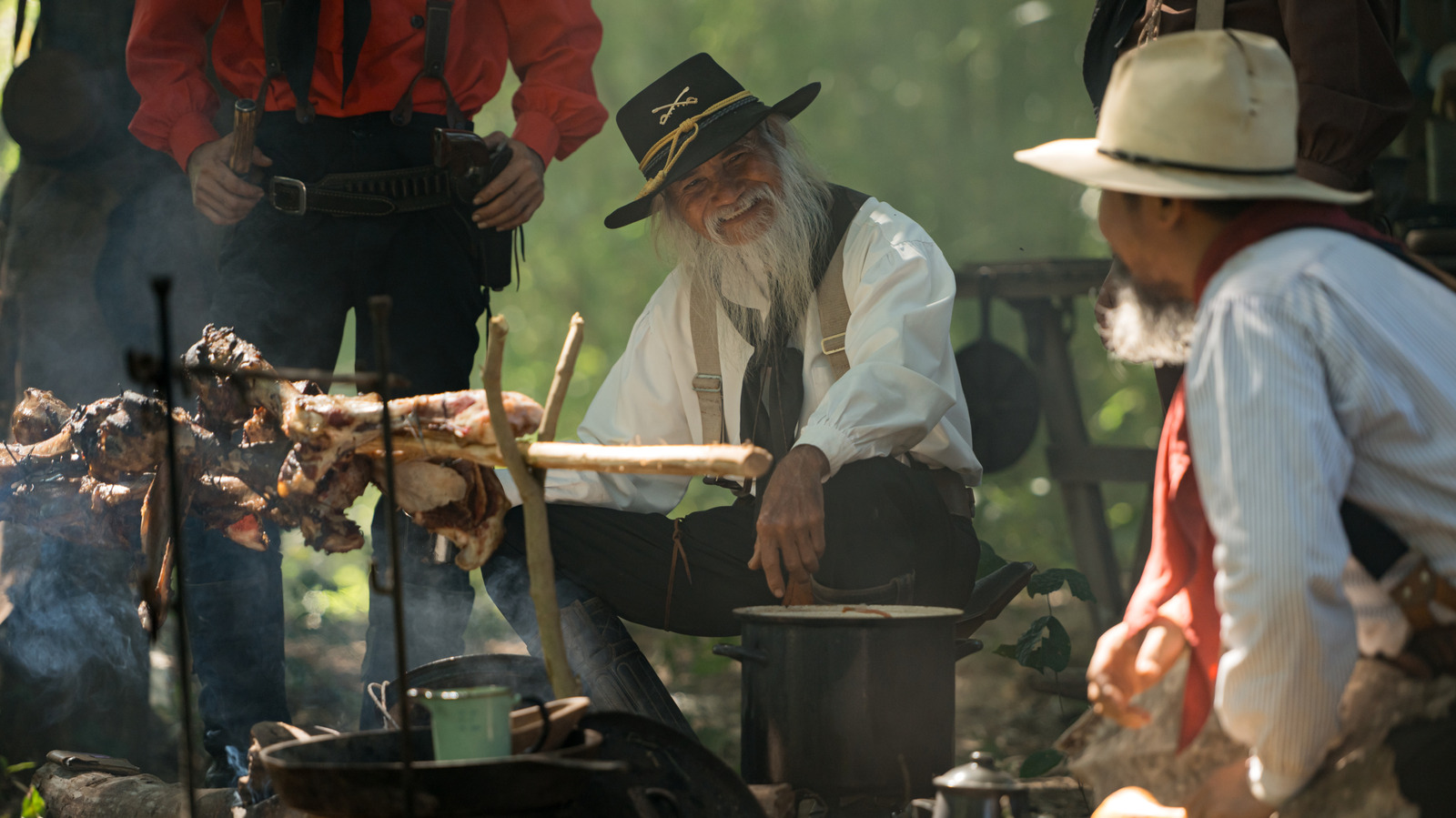
# Cowboys Fueled Long Days with High-Calorie Trail Staples
Cowboys working the American frontier needed fuel. The twelve foods they ate on cattle drives prioritized calories, carbohydrates, and fat over flavor or variety. This wasn't cuisine. It was survival eating.
The cowboy diet reflected harsh realities. Men spent twelve to fourteen hours daily in the saddle, exposed to extreme weather and physical demands. Ranch cooks prepared meals that stuck to ribs and sustained energy through exhausting work. Beans formed the foundation of nearly every meal. Cheap, shelf-stable, and packed with protein and fiber, beans provided reliable nutrition when fresh food vanished for weeks.
Hardtack, a dense biscuit made from flour and water, accompanied beans on virtually every drive. Hard enough to crack teeth, hardtack lasted months without spoiling. Cowboys soaked it in coffee to soften it before eating. Bacon grease cooked everything. Fat delivered calories faster than any other nutrient. Cooks saved every drop.
Salt pork, dried beef jerky, and canned tomatoes rounded out the protein rotation. Coffee boiled constantly. Water from questionable sources needed masking. Sugar appeared in coffee, biscuits, and molasses when available. Dried fruit and hardtack provided most carbohydrates. Fresh vegetables barely existed on the trail.
The economics mattered as much as nutrition. Cattle ranchers budgeted pennies per cowboy per day for food. Efficiency determined survival. A trail cook managing forty hungry men couldn't waste money on fresh produce or premium cuts. Bulk dried goods and preserved meats minimized waste and spoilage.
This diet shaped American food culture. The cowboy's austere eating patterns influenced ranch cooking that persists today in Texas and Oklahoma kitchens. Beans and beef remain centerpieces of Western