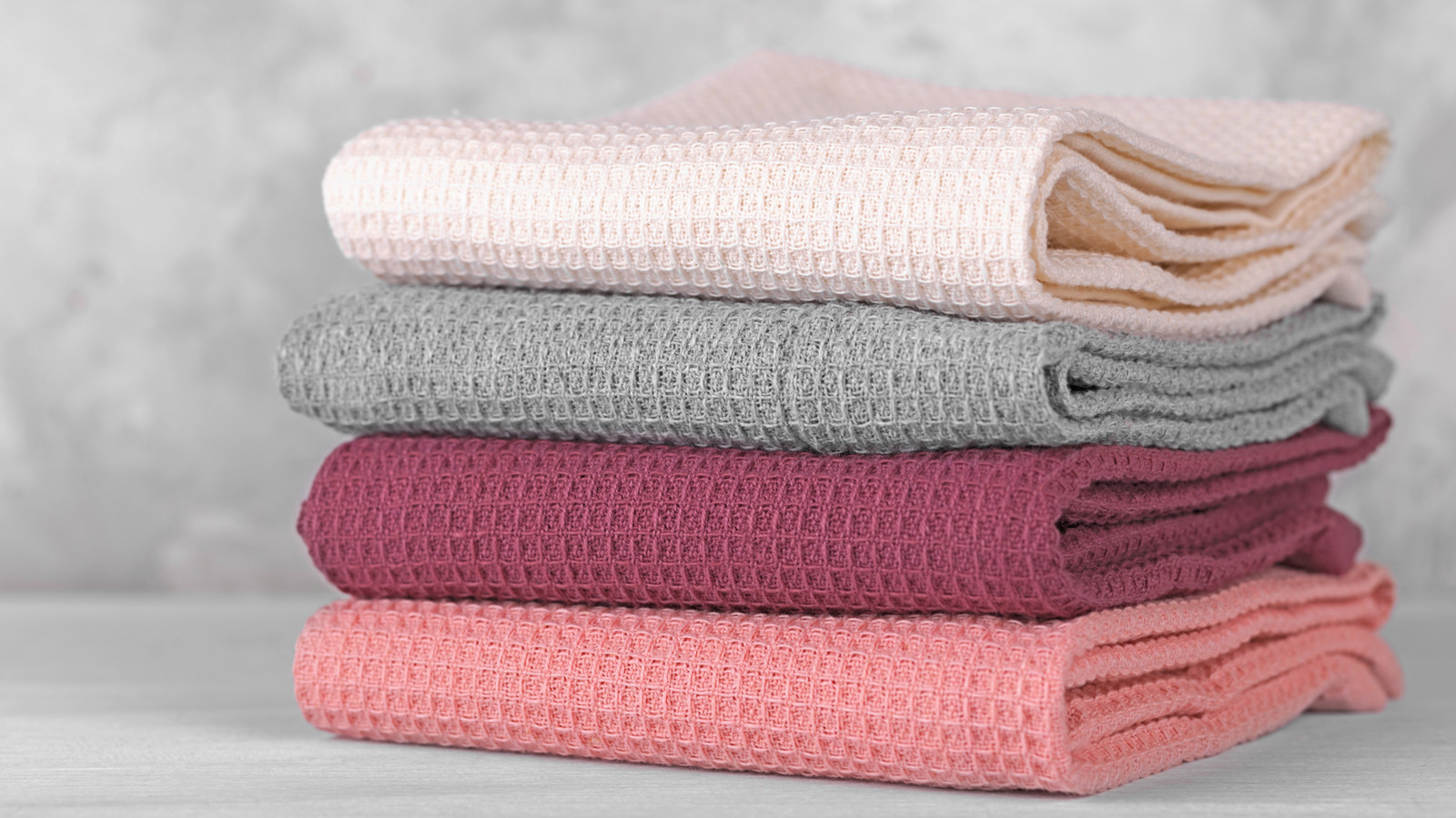
Old kitchen towels deserve a second life beyond the trash bin. Professional and home cooks alike rely on these workhorses for countless daily tasks, from wiping down counters to drying produce. But when they fray, fade, or lose absorbency, most people toss them out.
The reality is that worn kitchen towels remain functional for numerous purposes around the kitchen and home. Chefs commonly repurpose faded or threadbare towels as cleaning rags for the back-of-house, using them to wipe down equipment, mop spills, or buff stainless steel surfaces. Some establishments cut them into smaller squares for lint-free drying of delicate greens and herbs. Others transform them into pot holders or trivets, layering multiple towels for heat protection.
At home, old towels work perfectly as starter cloths for young cooks learning knife skills or plating techniques. They absorb water efficiently when training someone to properly dry fish before pan-searing or vegetables before roasting. The stakes feel lower when learning on already-worn linens.
Beyond cooking, kitchen towels find purpose as shoe-cleaning cloths near entryways, pet-drying stations, or storage organizers for measuring spoons and kitchen utensils. Some home cooks stuff them into stockpot lids for draining pasta or into colanders for washing delicate produce without bruising. Others use them as impromptu steamer cloth liners for dim sum or dumpling prep.
The most resourceful cooks donate worn towels to local culinary schools or community cooking programs. Beginning students need plenty of practice towels, and schools stretch budgets by accepting kitchen textiles that still have life left. Animal shelters and pet grooming facilities also welcome donations of soft, absorbent towels.
This approach aligns with zero-waste kitchen practices gaining traction among