# The Disco-Era Dishes That Shaped '70s Food Culture
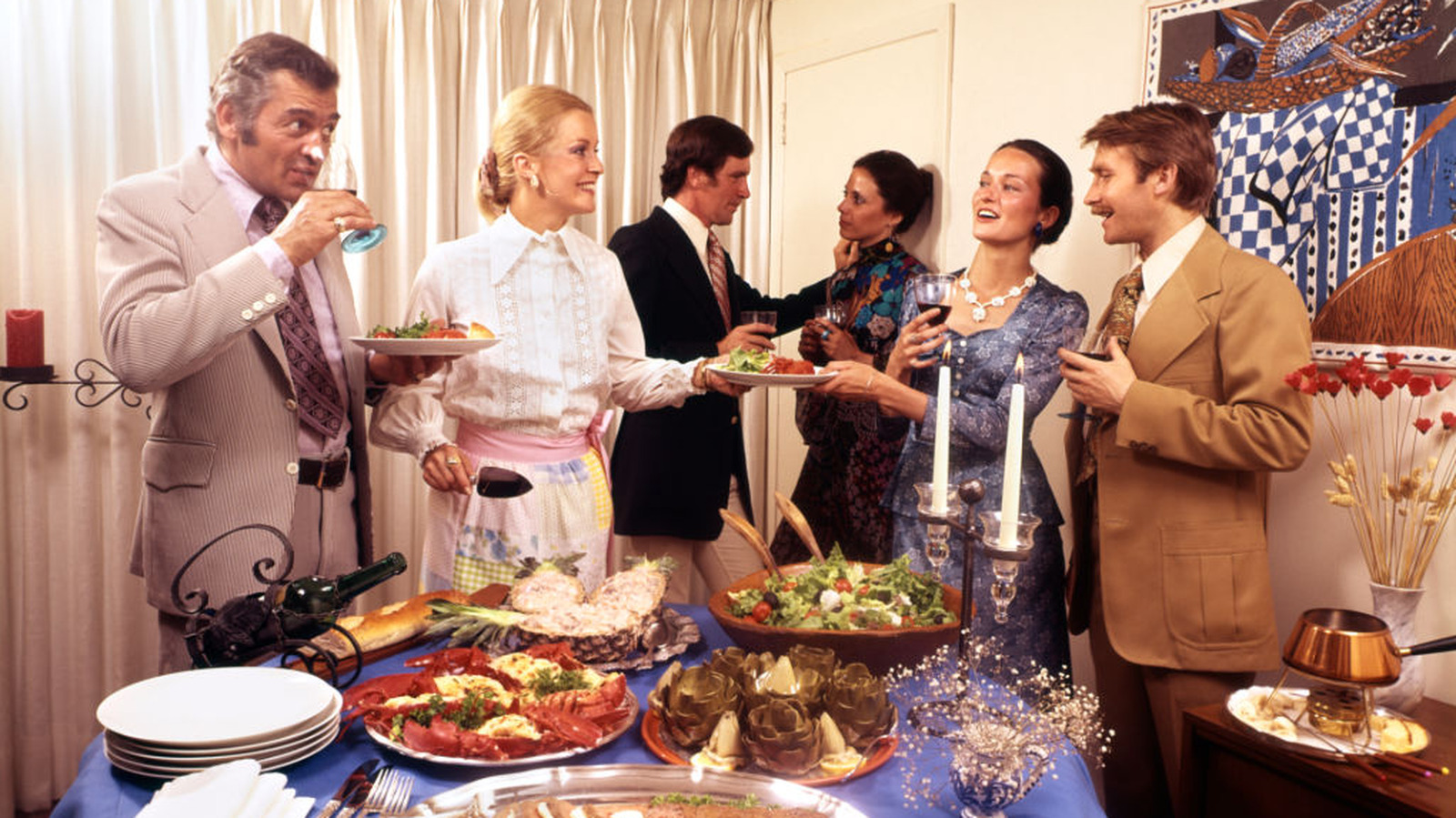
The 1970s kitchen embraced maximalism. Dinner parties demanded drama, color, and enough gelatin to build architectural monuments. While disco balls spun overhead, home cooks reached for aspic, fondue pots, and anything swimming in cream sauce.
This era rejected the restraint of the 1950s. Casseroles dominated tables, layered with canned vegetables, cream of mushroom soup, and processed cheese. Chicken à la King appeared on countless suburban tables. Beef Wellington became the aspirational centerpiece for anyone hosting. Chafing dishes kept food warm during hours-long cocktail parties where Manhattans flowed freely.
The decade worshipped convenience with religious fervor. Canned pineapple appeared in savory dishes. Molded salads containing shrimp, mayo, and miniature marshmallows became legitimate dinner components. Tuna noodle casserole, though invented earlier, reached peak popularity. Frozen TV dinners offered a modern escape from cooking entirely, aligned perfectly with the decade's obsession with futurism and technology.
Yet sophistication had its own '70s flavor. Fondue sets became status symbols. Beef bourguignon gained traction after Julia Child's influence persisted from earlier decades. Escargot and shrimp cocktail promised continental glamour. Baked Alaska made dramatic tableside appearances at upscale restaurants.
Cocktails matched the food's boldness. Piña Coladas, Harvey Wallbangers, and Fuzzy Navels dominated bar menus. Wine came in jugs and boxes rather than bottles. Cheese boards, cured meats, and bread constituted sophisticated grazing.
This wasn't refined cooking. It was democratic, accessible, and