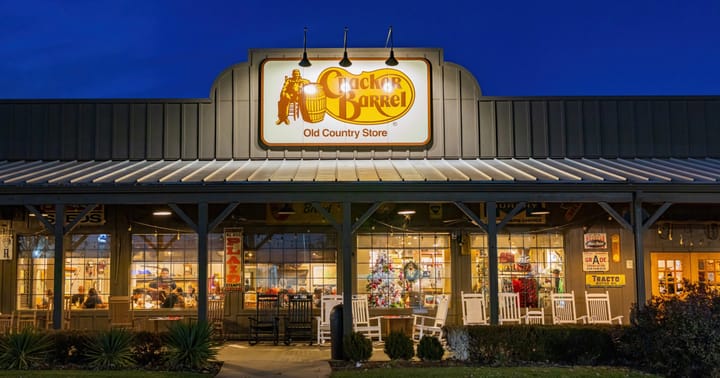
Cracker Barrel Old Country Store has accelerated its recovery from the backlash over its logo redesign, prompting the casual-dining chain to raise its fiscal-year revenue guidance despite lingering traffic declines.
The Tennessee-based restaurant operator faced fierce customer pushback earlier this year after simplifying its iconic barrel-and-checker logo, a visual identity customers had trusted for decades. The redesign sparked social media outrage and boycott calls, forcing the company to reverse course and restore the original branding within weeks.
The damage appeared severe at first. Customer traffic dropped noticeably in the immediate aftermath, and many observers predicted a prolonged recovery period. Yet recent data shows the chain's recovery trajectory steepening faster than anticipated. While foot traffic remains below year-ago levels, the rate of decline has slowed considerably, and consumer sentiment has shifted back toward the brand.
The improved momentum gave Cracker Barrel enough confidence to raise its full-year revenue guidance, signaling management believes the worst has passed. The company attributes the faster-than-expected rebound to the quick decision to reinstate the original logo and the brand's strong legacy appeal among its core demographic of rural and small-town diners.
This situation exposed a fundamental lesson about restaurant branding. Casual-dining chains built their customer bases on consistent visual identity and nostalgia. When Cracker Barrel tampered with that formula, it triggered an emotional response that transcended typical brand criticism. Customers didn't view the change as a modernization effort. They saw it as abandonment of the authentic country-store aesthetic that defined the chain.
The recovery also reflects broader consumer behavior in the restaurant sector. Despite economic uncertainty and inflation pressuring household budgets, value-conscious diners remain loyal to familiar brands that deliver consistent food and experience. Cracker Barrel's recovery suggests that admitting mistakes and respecting customer preferences can rebuild